Eastern Journey: Kagoshima (10) — Gathering and Refining the Fire of the Five Elements
For a long time I had wanted to see a live volcano with my own eyes, but I was probably too lazy, so there never seemed to be a chance to go in person.
Still, a bit of curiosity remained, so I poured over many videos and photographs — yet always felt they lacked a touch of true vitality.
Spiritually, one can ignore everything in reality and treat the world as nothing but a dream; but in practice, one must still eat when it is time to eat and sleep when it is time to sleep — nothing can be omitted.
That which cannot be omitted is the reality of the world, and also the boundary between illusion and reality.
If the Buddhists' excellence lies in seeing through reality and treating all worldly things as illusion, the Daoists' excellence goes further still, for the Daoists can also turn all that is illusory into reality.
I had always assumed volcanoes must be violent, but this trip changed that view.
Sakurajima volcano is quite friendly to visitors — it erupted on the way to Sengan-en, and once inside the garden it showed its most charming face.
If the Sakurajima of media reports is like a cranky old man, what we met was more like an ethereal woman showing her finest side.
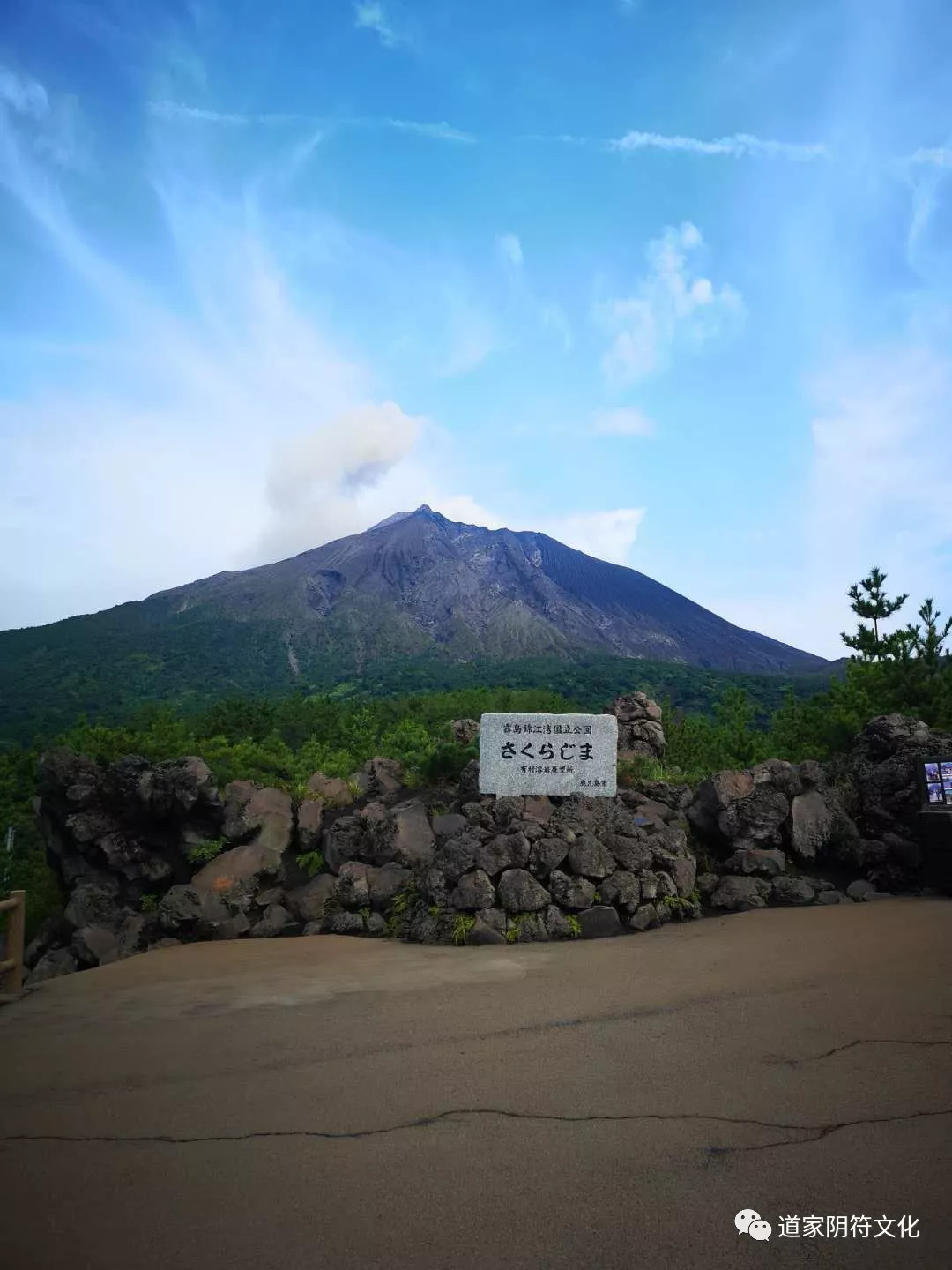
Up the mountain it was very calm, and a student who had climbed with us asked: Daoist Master, can you make the volcano erupt?
That is not up to me, this humble Taoist answered.
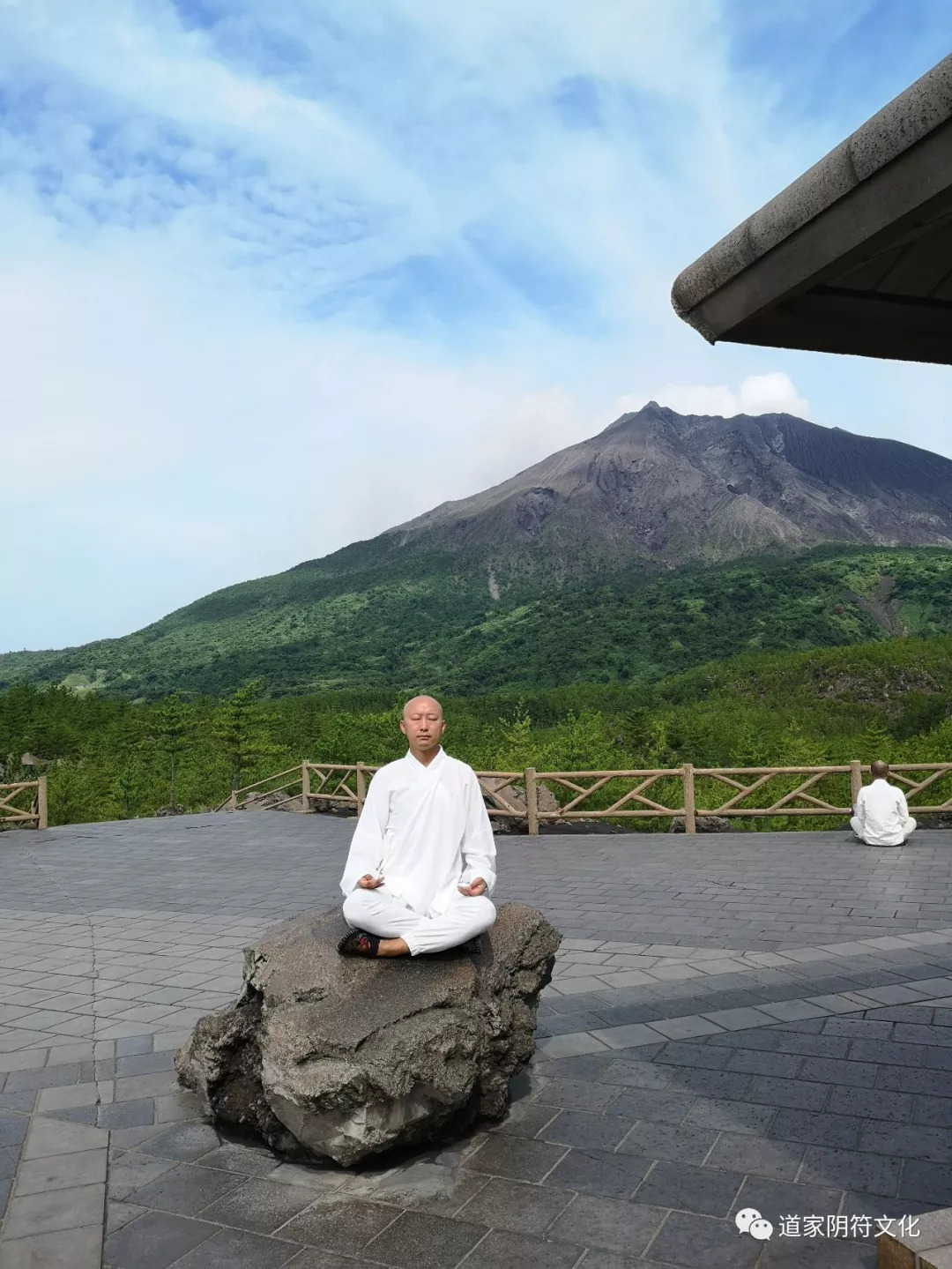
At the destination everyone found a suitable place to sit, closed their eyes in meditation, and prepared to immerse in nature to the sound of the melodious and steady guqin.
Just then someone called out: the volcano erupted.
Looking up, one only saw a plume of light smoke from the volcano, lingering and ethereal.
For the volcano to erupt just as we were meditating — such a powerful external response is rare; one can only marvel that the deep fortune of everyone present made such an encounter possible.
This humble Taoist then raised a phone long prepared and spent some ten seconds recording this precious moment before beginning the practice.
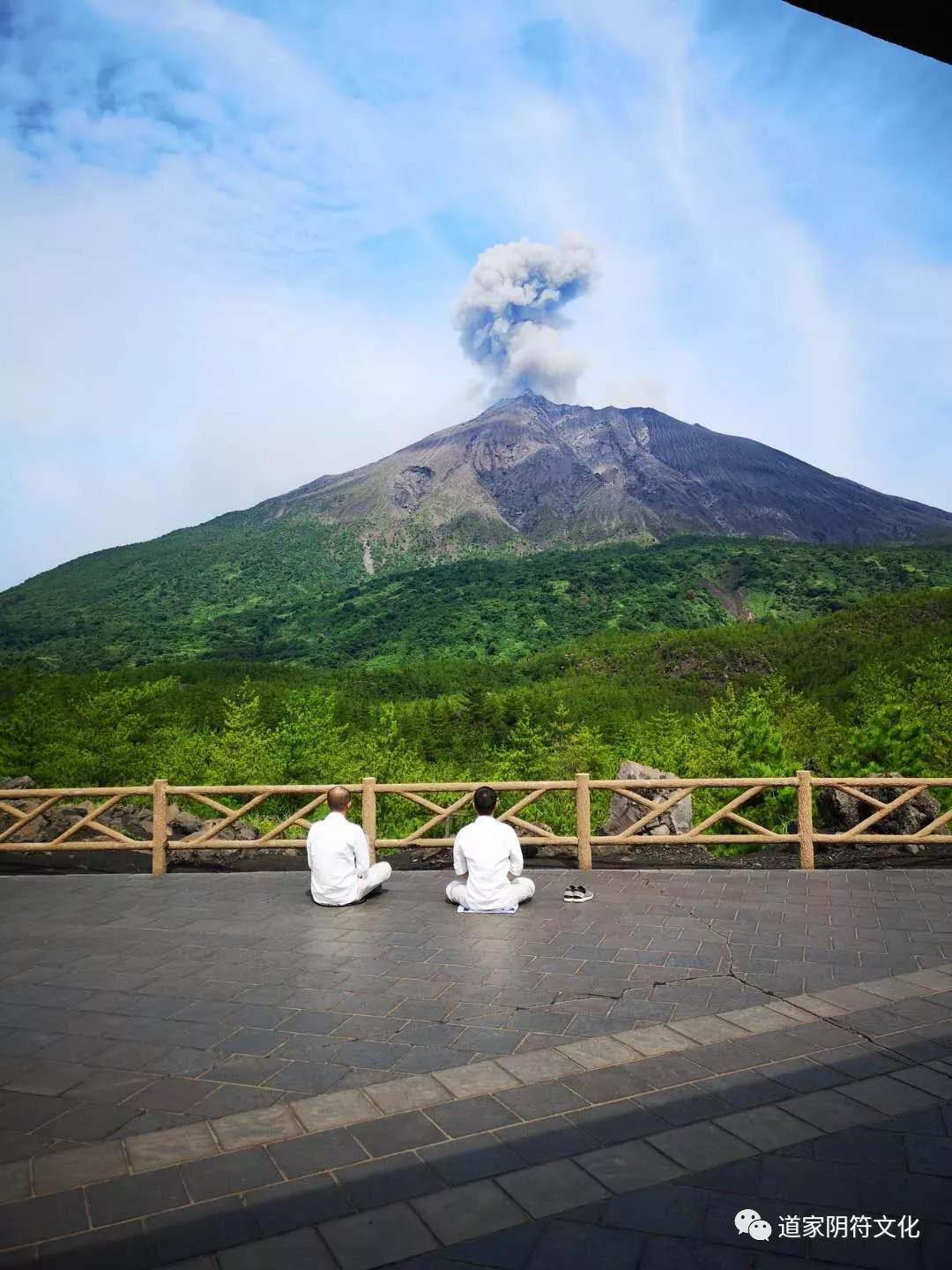
Waves of heat rose through the body; the sensation was stronger than I had expected. On impulse I tried circulating Five-Fire refinement of form within the body, but could not rein it in at once and slightly strayed into the Lung meridian — though without harm.
Because the inner landscape this time was extremely clear, gathering and refining went very quickly. This humble Taoist soon closed the practice; glancing around, others were still immersed, so rather than disturb them I continued to sit in silence.
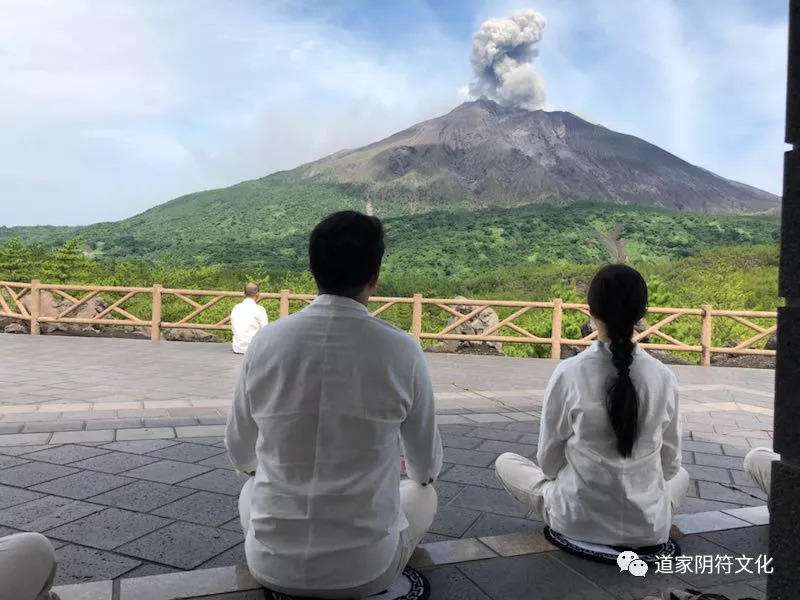
Those who continue diligent practice after returning will one day know that this volcanic gathering and refining will greatly aid their later cultivation, and may prove important for their entire lifetime.
The same is true for this humble Taoist: the gathering and refining at the volcano was the greatest gain of the trip; everything else was icing on the cake.
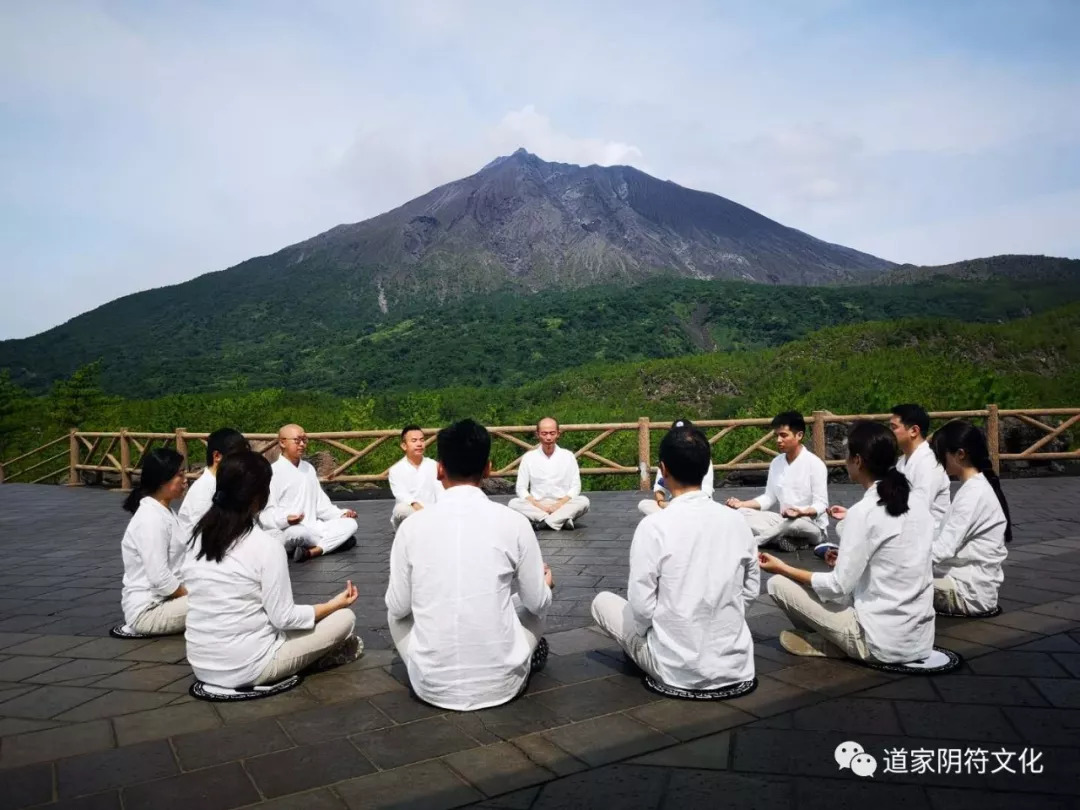
After meditation everyone still felt unwilling to leave, so they gathered again in a circle, sat a while longer, and took photos as mementos. In the photos one can see that the volcano had stopped erupting.
Afterward the group went to the foot of the other side of the mountain, where a natural hot spring could be used for foot-soaking. Just as they enthusiastically immersed their feet, they found themselves covered all over with ash.
It turns out that eruptions produce great quantities of volcanic ash; during meditation the group was lucky — the wind happened to blow the other way, so the eruption not only did not disturb their practice but allowed them to record such precious scenery.
Such coincidence cannot but be sincerely marveled at.
One discovery of this trip: the Japanese do not seem to bury their dead on mountains, so large cemeteries on hillsides are rarely seen. Yet many mountains here in Kyushu have fine feng shui dragon-lair sites, which is quite surprising.
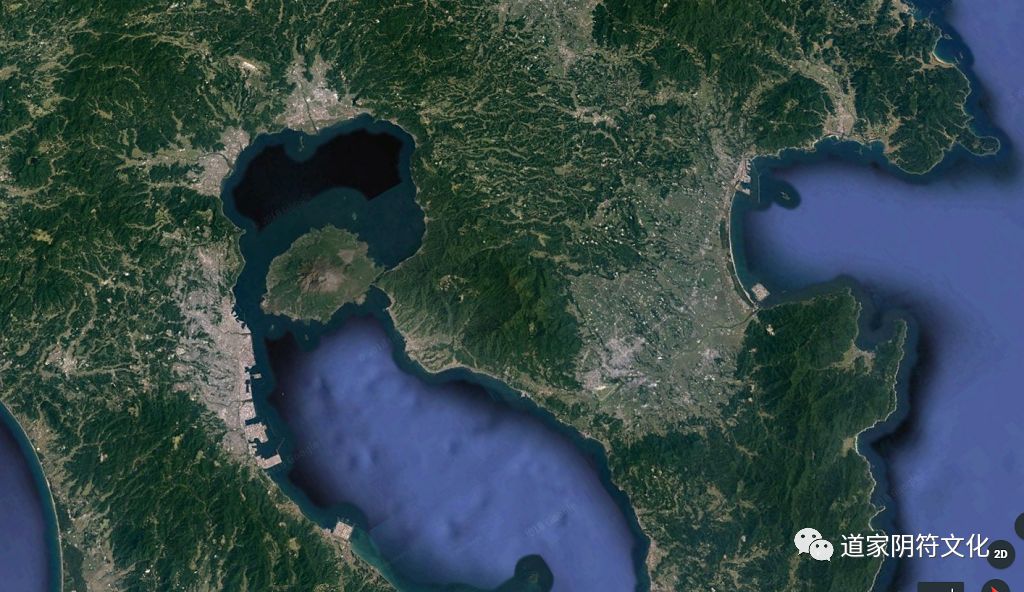
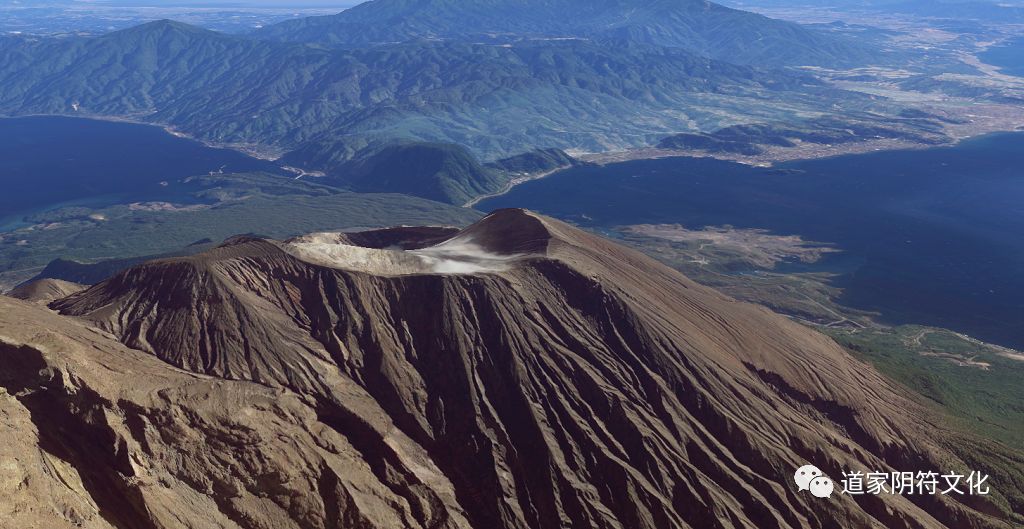
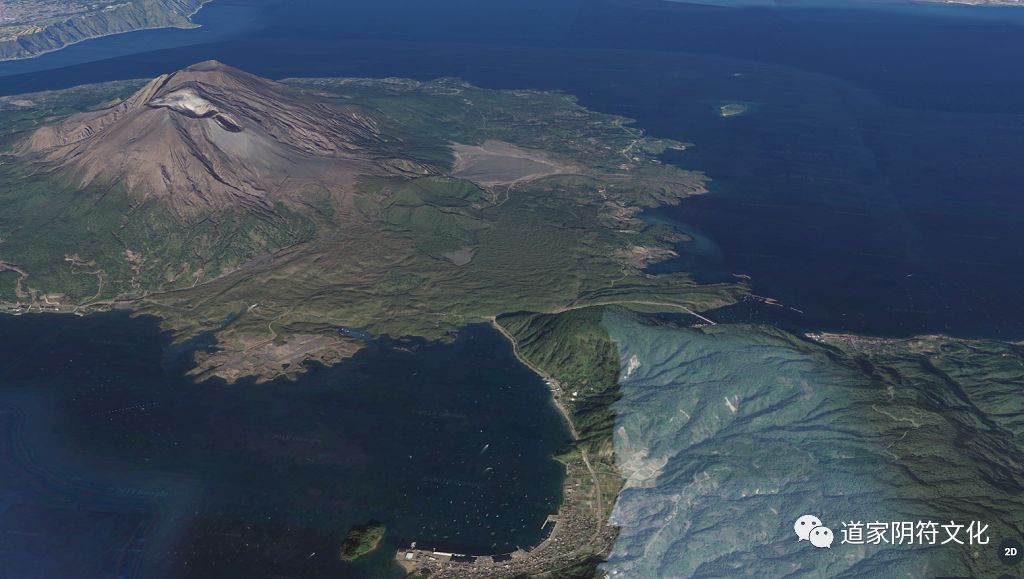
Finally, some satellite images.