Latest notes
Master Wang's Yang Dwelling Judgments: The Zhang Residence at Zhaoru Village
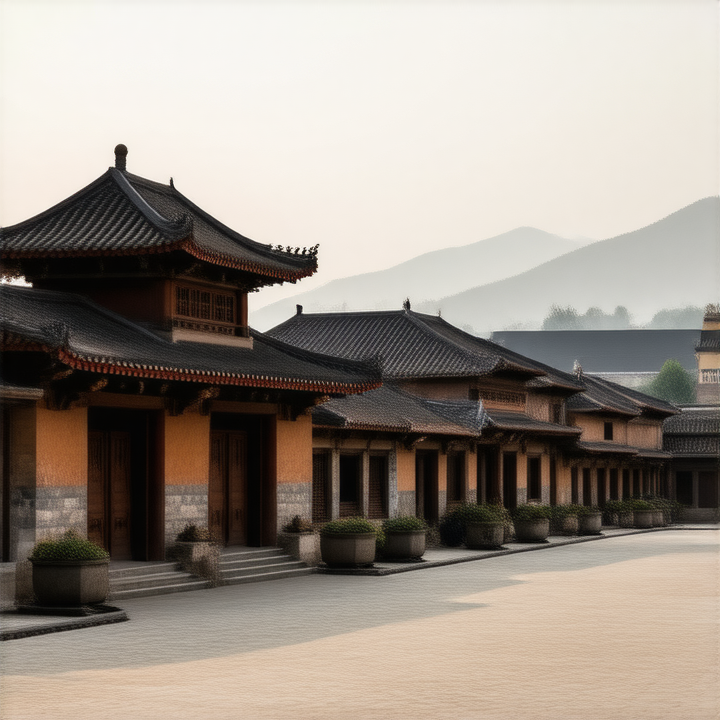
The Zhang residence at Zhaoru Village is a Kan (Water) dwelling, laid out as a siheyuan courtyard. The street-front rooms were not yet raised; although the Zhen (east) and Xun (southeast) sectors were prosperous, neighbors in the chou and yin directions had erected two tall buildings—though immediately to one's own east there was no structure, only a house one household away. The judgment: the eldest branch had five sons. Behind the main dwelling, several parcels of land had been successively purchased on either side, all adjoining the old house. Their lengths varied, protruding and receding, so that they resembled water; water can nourish the wood of the eldest branch, hence the abundance of sons. The second branch died in a yin year, in a manner both violent and strange.
 Feng Shui Cases
Master Wang's Yang Dwelling Judgments: The Li Family's Kan Dwelling at Wutong Village
The Li family's Kan dwelling at Wutong Village had two street-front rooms, two middle rooms, many houses on the eastern neighbor's side, and a depression in the west. When Master Wang first entered, he saw only the front half: two buildings, each of two rooms. He judged: two rooms form an earth shape. Earth overcomes the water of the Kan dwelling, cutting off the middle son; water cannot generate wood, cutting off the eldest son; and the metal qi of the west is deficient, cutting off the youngest son—all three branches should be extinguished. Upon reaching the rear courtyard and seeing three rear rooms, however, he rejoiced greatly: front and back are very long, transforming the form into wood.
 Feng Shui Cases
Tales of Old Shanghai through a Case from "New Cases of House Destiny": The Mysterious Incense and Candle Shop Owner
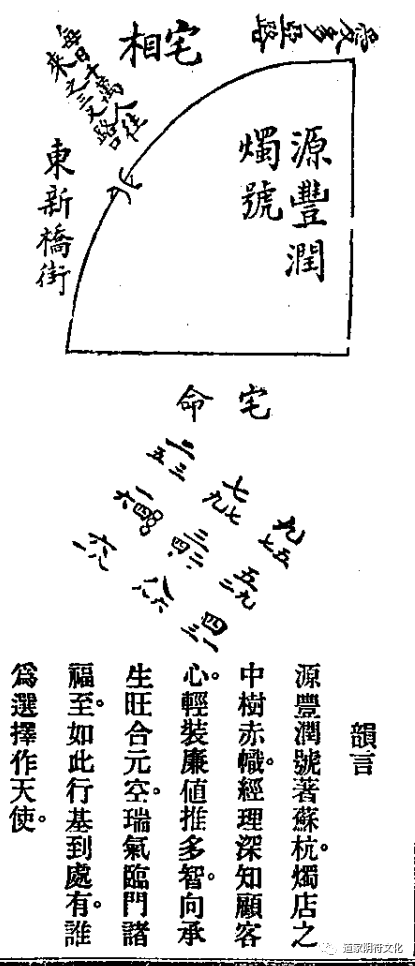
In "New Cases of House Destiny" there is a case that goes like this: the Yuanyuanfeng candle shop was built during Period Three and received prosperous qi, so business grew. Yet the story behind it is far from simple. In old Shanghai, the shop was thriving and famous — virtually a landmark. But anyone trying to learn about "Yuan Feng Run" is easily led to another figure: the renowned modern Shanghai industrialist Yan Xinhou, founder of China's first domestically run bank, the Imperial Bank of China. However, this "Yuan Feng Run Incense and Candle Shop" had nothing to do with Yan's enterprise.
 Feng Shui Cases
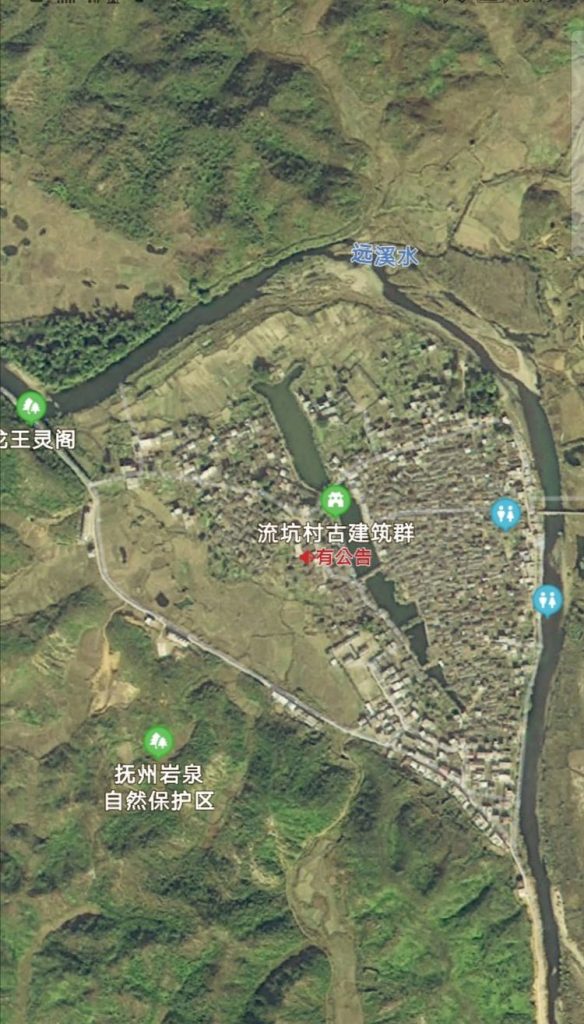
The Village Personally Sited and Designed by Feng Shui Patriarch Yang Yunsong: Liukeng, the Foremost Village of the Ages
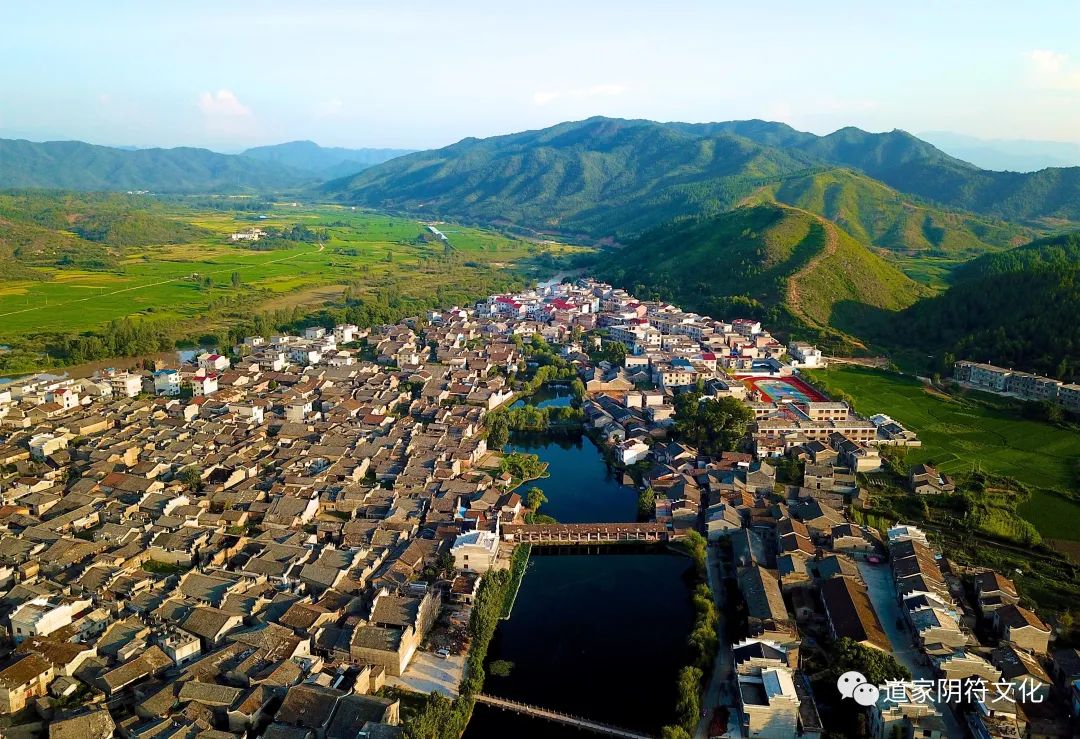
In the Tang Dynasty, a dust-covered old man slowly emerged from the mountains, dressed in plain clothes and carrying a heavy pack, walking along a rugged mountain path. His face was lined with the marks of years, his gait somewhat unsteady, yet his eyes were firm and strong, as if telling the story of his unyielding life. On both sides of the path stretched rolling mountain ranges, verdant trees and layered peaks woven into a beautiful scroll. A gust of wind-blown dust struck his face; the old man narrowed his eyes and pressed on. Far off, a few crude thatched huts were faintly visible, surrounded by forest and streams.
 Feng Shui Cases
First a Family Massacre, Then a Fire — and Finally Becoming a Legendary Designer
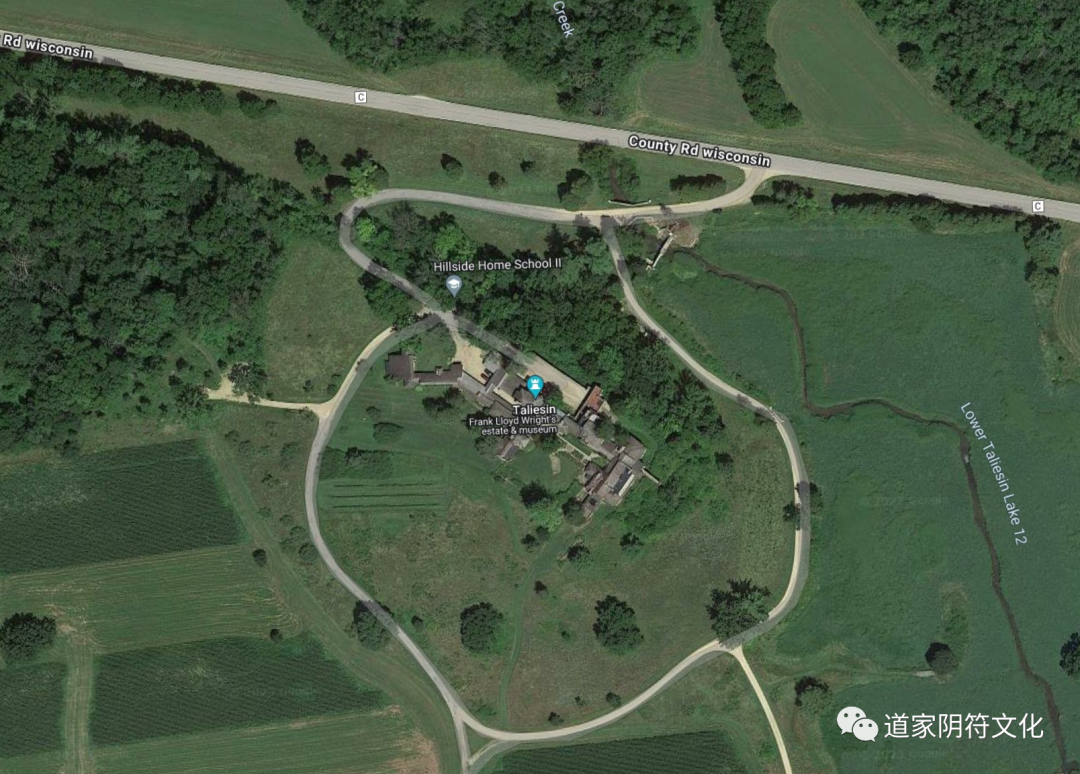
This was the residence of architect Frank Lloyd Wright. After he built it in 1911, in 1914, while he was away, the household cook massacred the family and set the house on fire. He rebuilt it — and then in 1925 a fire caused by an electrical short circuit destroyed it again. After the second fire he rebuilt once more, and from then on fortune followed him, as he leapt to become one of America's most legendary architects. Of the 1,114 works he designed in his life, 532 were reformative for the history of American architecture.
 Feng Shui Cases
On the Feng Shui of Liukeng Village
It was during the Southern Tang dynasty that the Dong clan ancestor Dong He is said to have discovered a place of extraordinary beauty. Legend has it that immortals once ascended to heaven here, leaving purple vapors circling for days without dissipating. Between two flanking mountain ranges, a river flows through the middle. Ordinarily, one would choose a spot embraced by hills and embraced by water; the watercourse runs from south to north, and at one point it bends around, cradling both sides. At first, Dong He had his eye on one of these embracing parcels, called White Dragon Pond. But later he met Master Yang, and Dong He naturally asked for his guidance. Master Yang pointed across to a stretch of barren, wild hillside and said, "You should establish your lineage here." Without a moment's hesitation, Dong He followed Master Yang's advice.
Recorded Cases of Self-Practiced Feng Shui Bringing Fortune
Ding Mengzhang of the Ming dynasty lost his mother in youth and failed to secure an auspicious burial site. Legend has it that a divine person bestowed upon him the secrets of earth geomancy; he thereby mastered the principles of mountain and river forms and configurations. Later he chose his own burial ground, becoming the illustrious founding ancestor of the Ding clan of Yimen, a great lineage of Huaining. To this day, for over six hundred years, the clan has flourished with abundant descendants and a thriving literary tradition. It was once said that he wrote a work called True Essentials of Luojing Absorption and Resolution, but it has never appeared in the world; only Ni Huanan, in his own writings, compiled Ding’s method of the Sixty Dragons Dividing the Gold. Master Shen Chang is Shen Hao, a man of the Kangxi era. In his youth he lost his father early and was poor, so he studied the classics, histories, masters, and collections, and also practiced feng shui...
 Feng Shui Cases
A Joint Analysis of the Tombs of Sun Yat-sen's Mother, Lui Lok's Ancestral Tomb, and Cen Qingqian's Tomb
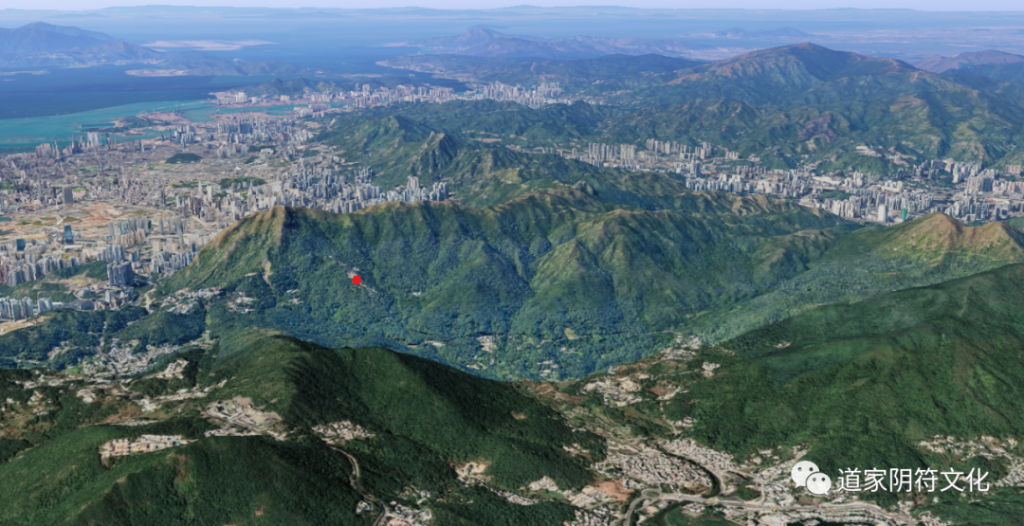
In Pak Fa Lam (Baihualin), Hong Kong, there are several famous cemeteries. One of them is the tomb of Sun Yat-sen's mother, hailed as the foremost of Hong Kong's ten great tombs, an excellent feng shui site. Mr. Sun Yat-sen needs no further introduction—his renown was illustrious—yet he lived in modest poverty; his son once held office but was also rather poor in later years; though none of his descendants achieved great things, they lived in safety and enjoyed considerable ancestral blessing.
An Ancient Tomb in a Certain Place, Yiwu, Zhejiang
An ancient tomb in a certain place, Yiwu, Zhejiang: before the tomb a pond backs the water; beyond the pond, water from the valley fields rises tier by tier toward the tomb, and the tomb faces that direction. The distant field waters fall level by level, bowing toward the front of the tomb. They bow down to below the pond; though the water mouth is broad, standing in the tomb one cannot see the water exiting. When first planted, the third son suddenly prospered, wealthy and eminent throughout the county; later a tribute scholar emerged; through the third generation down to the sixth generation the family remained rich. Because the Xu–Qian water matched the landform, and it also fell in a timely and auspicious cycle, it prospered quickly and endured long. Had the landform not been of this kind, even a sitting on Chen facing Xu would have prospered for only twenty-some years at most, and decline could not be avoided. This landform is exceptionally fine, and further accords with the Nine-Star Water Method; prosperity is therefore naturally long-lasting. The third branch received the long sand and was vigorous, so after growing wealthy a tribute scholar also emerged.
 Feng Shui Cases
The Secrets of British Feng Shui — The Palace of Westminster, London
The Palace of Westminster in Britain, also known as the Houses of Parliament, was selected by the United Nations as a World Cultural Heritage Site in 1987. The palace has a tall tower at its southwest corner and another at its northeast corner. Situated on the banks of the Thames, it has been the seat of the British Parliament since 1547. Because Britain is a constitutional monarchy and all major decisions are made through Parliament, this is the feng shui heartland that influences the entire fortune of the nation. On 16 October 1580, William Borrough made observations at Limehouse in London and found the magnetic...
 Feng Shui Cases
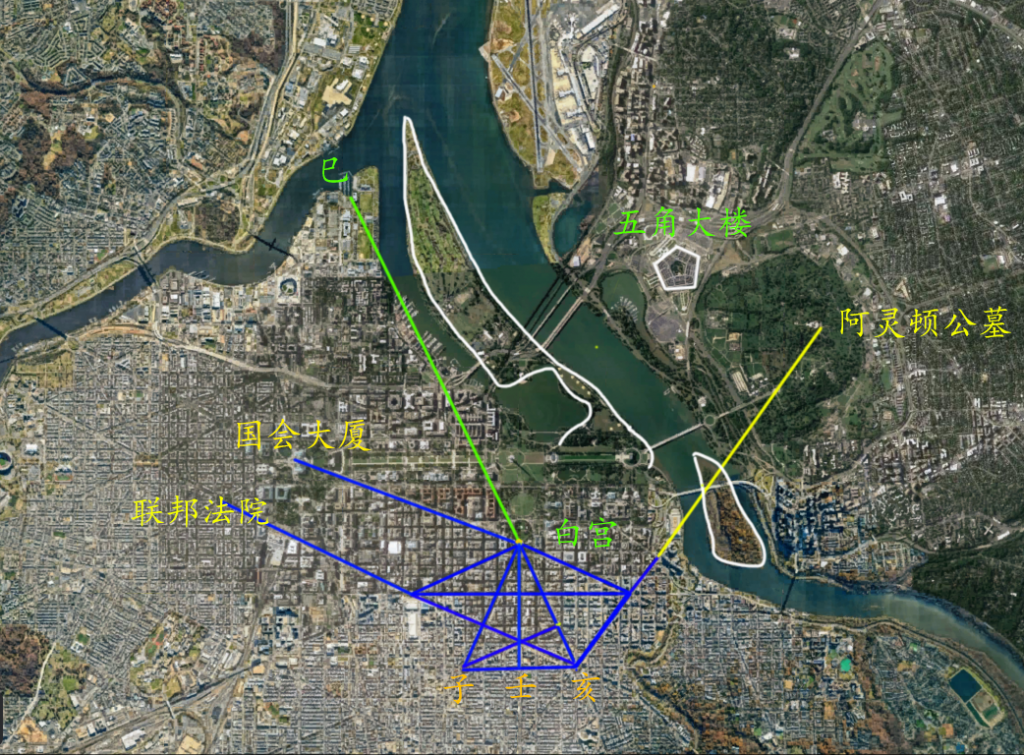
Those Born in the Year of the Snake — Die? — A Brief Discussion of the Feng Shui of the White House in the United States
There is a version online of the Chinese zodiac signs of US presidents, but unfortunately it assigns the signs by the Chinese lunar calendar; in fact one should calculate by the sexagenary stems-and-branches. The most typical case is Abraham Lincoln, born 12 February 1809 — that year Chinese New Year fell on 14 February, yet the solar term had already changed on 4 February. By the stem-branch calendar, he is undoubtedly a Snake. Ox: 4 — Gerald Ford*, Warren Harding, Chester Arthur, Barack Obama. Tiger: 4 — James Monroe, Martin Van Buren, Dwight Eisenhower, William McKinley*. Rabbit: 3 — John Adams...
The Qian Clan Ancestral Tomb at Xindu Bridge
In the 38th year of Qianlong (fifth cycle), sitting Ding and facing Gui; in the 44th year of Qianlong (sixth cycle) buried again in the same orientation. Ding Peak, Kun Mountain; Geng-You mountains in the distance; Shen-Geng incoming dragon. Kan low fields; Chou-Gen-Yin outer hall. Large water runs from Jia-Mao-Yi and disappears at Chen-Xun. A small stream inserts at Wei; water from Bing-Wu-Ding-Si converges and exits at Chen-Xun. Ding-Bing blocked by houses; Wu water in the open. After burial, great prosperity of progeny and wealth. In the 52nd year of Qianlong (1787, Ding-Wei, second period sixth cycle) another burial sat Xin facing Yi on mountain land. After burial, great prosperity of progeny and wealth—yet subsequent years brought injuries to women, deaths in childbirth, lost children, and lawsuits.
An Example of Liu Kaiqi's Falsely Attributed Tomb in Xingning
It is said that the ancestral tomb of Liu Kaiqi once had 66 feng shui masters jointly divining the site with a luopan. Two families, the Zhong and the Liu, both claimed him as their own ancestor and brought the case before the magistrate; the Liu family prevailed, so the tomb was fabricated as a Liu ancestral tomb. This mountain forms a crouching elephant, with a Jia dragon entering the head; on the earth plate the true needle faces Qian from a Xun sitting. The Ren–Zi great river water enters the hall, and the right water overturns to the left, exiting at Ding sitting — this uses the Three Combinations method, a Wood bureau draining water from its own reservoir. Were the water to exit at Ding, turn to Wei, and leave toward Kun, it would match the saying of the Nobleman, the Prosperity Horse, and mounting the Imperial Street. Yet with water exiting at Ding it does not conform to the hexagram method, and when judged by the Ai Xing stars it is harmful. Although it is a good site, one must not blindly trust the rumors. All claims that this is an ancestral site producing great wealth, many sons, and eminence for later generations are false.
The Zheng Clan Site Inside Baima Bridge, Pujiang County
The ancient sages said: the true dragon hides in fortunate spots that are hard to find; only the facing mountains can know the mind of fortune. I saw this when Lai Taisu set the Zheng clan site inside Baima Bridge in Pujiang — Chou sitting, Wei facing, with a three-part shift toward Gui and Ding. From Master Lai's discarding of the main trunk to set the side branch: for the facing mountain is the round metal of the Great Yang; the main trunk and main seat face it without argument. But when one walks left and first looks down, it seems all the more intimate and close, with no wavering at all — this is what is meant by "only the facing mountains can know the mind of fortune."
A Feng Shui Chat on the Palace of Versailles, France
This article was posted on the public account this past July; images omitted—those who wish to see them may follow the “Daoist Talisman Yin Talisman Culture” public account. I. The Building of Versailles — The world-renowned Palace of Versailles sits in the town of Versailles, 18 km southwest of Paris. Its interior architectural style is Baroque with some Rococo, famed for its golden splendor and magnificence. Yet as a palace for living, its feng shui is truly terrible: since Louis XIV moved the French royal court into Versailles, the French royal house began its decline.
 Feng Shui Cases
A Casual Feng Shui Discussion of Buckingham Palace in London, UK
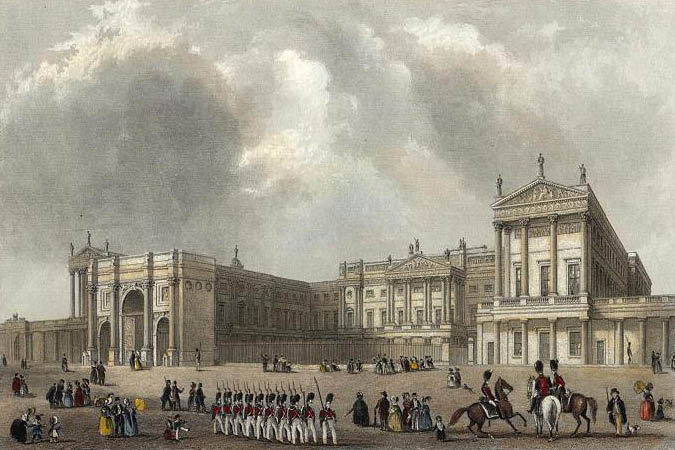
When people discuss the feng shui of Buckingham Palace, most say it is good — but is that really so? Whether something is good or bad involves judgments of values. Buckingham Palace was originally built between 1703 and 1705 as a town house; in 1837, after Queen Victoria ascended the throne, it became the official royal residence. In 1840, after the Queen married Prince Albert, they felt the place was too small and so renovated it. After completion in 1847, the interior was rearranged into its present form.
A Case of "Ling Zheng Yi Li" (Empty and Full)
Period of the Eighth Yu, seventh floor, sitting Wu facing Zi, large balcony on the south with a pool and other buildings outside, main door facing north from the west, fish tank placed in the entryway, wide open space to the north from northwest to northeast, overall renovation refined and elegant, neat and tasteful.
 Feng Shui Cases
The Catacombs of Paris, France and Feng Shui
In the 18th century, due to outbreaks of smallpox and plague in Paris, a large number of Parisian residents died. Generally, the custom in Paris was to bury the dead in cemeteries near churches. However, because the number of deaths was so high, it was impossible to accumulate graves on the surface, so pits were dug underground to pile up corpses. In 1786, all the corpses were moved to the former underground quarries. According to statistics, the final number of bones piled up was approximately between 6 million and 7 million, thus forming the Paris Catacombs in France. So, did the Paris Catacombs in France have an impact on the Feng Shui of France? In 1789, the French Revolution. In June 1790
18 posts