Latest notes
Research Materials on the Tomb of Wang Hua, Anhui
A systematic survey of the tomb of Wang Hua—illustrious ancestor of the Huizhou Wang clan and Duke of Yue of the late Sui and early Tang—on Yunlan Mountain, She County. Treated as a burial and analyzed by yin-dwelling form method; the historical record is grounded in the Old and New Tang Histories, the Comprehensive Mirror, and Luo Yuan's Xin'an Gazetteer.
The Tomb of Zhu Gui at Wuyuan, Jiangxi
This report takes the Tomb of Zhu Gui on Liantongshan, Wuyuan, as its proper subject, correcting the toponymic confusion in the label "Huangdun Tomb of Zhu Gui." The tomb of Zhu Gui (the "Lord of Chayuan"), ninth-generation ancestor of Zhu Xi, lies at Liantongshan in Wuyuan (present-day Liantongshan, Xiangtian Village, Rancheng Subdistrict, Wuyuan County); Huangdun is merely the Zhu lineage's ancestral-homeland memorial site, not Zhu Gui's burial place. Drawing on Luo Yuan's Xin'an Gazetteer, Zhu Xi's preface to the Wuyuan Chayuan Zhu Genealogy, Cheng Shangkuan's Eminent Clans of Xin'an, genealogies, official heritage notices, and local gazetteers, the report clarifies identity, burial site, form principles, and the history of repairs, and corrects both the misnamed title and the personal-name variants Huan/Gui.
The Tomb of Cheng Lingxi at Huangdun, Anhui
A systematic investigation of the tomb of Cheng Lingxi (Duke Zhongzhuang), illustrious ancestor of the Huizhou Cheng lineage and celebrated general of the Chen dynasty. Treated as a burial site and analyzed through yin-dwelling form principles, drawing on standard histories, gazetteers, and Song–Ming Huizhou sources.
Hu Yuanlong's Tomb (Taiji Hu Village, Jixi — “The Imperial Tomb”)
An ancestral yin-dwelling tomb of the twenty-fifth-generation Longchuan Hu lineage, at the eastern mouth of Taiji Hu Village in Fuling Town, Jixi County, Anhui. Locally known as “the Imperial Tomb” for its alleged geomantic affinity with imperial siting, this report centers on form-method (xingfa) analysis, with historical, legendary, and genealogical source criticism.
Elder Guto’s “Master-Slaying Site” · The Folded-Centipede Form of the Li of Humang
An independent study of the Humang Li ancestral site (“Folded-Centipede Form”) in the “strange acupoints / transmitted doubts” fascicle of Dili Renzi Xuzhi — the famous place where Elder Guto (later also called the monk Jingdao, attributed author of Rudiyan Quanshu) is said to have sited the acupoint and then been slain by a thunderbolt. The case pairs with the Zixi Liu “Immortal Offers the Palm” site in the same classic and can be read alongside it.
The Yanjiang Huang Ancestral Site of Fengcheng, Jiangxi ("Nine Sons, Ten Ministers": Dog-Resting Hill · Nine-Brain Hibiscus)
Nature of the site: ancestral burial of the Yanjiang Huang of Fengcheng (a branch of the Jiangxia Huang), a yin-dwelling lineage site revered as the fount of the "Nine Eminences." "Nine Sons, Ten Ministers" is genealogical and popular legend, not settled dynastic history; this article therefore treats the material in two layers — first the legend as transmitted, then a critical check against historical fact. The site lies in the area of Shanshang Huangcun, Dushi Town, Fengcheng City (ancient Yanjiang / Dashe).
The Tomb of Luo Zhu at Meiling, Nanchang
This report systematically arranges materials from dynastic histories, local gazetteers, genealogies, feng shui literature, and field data. Dynastic and gazetteer citations rest primarily on the Shiji, Hanshu, and official gazetteers; genealogical citations note version and date; feng shui literature cites classics such as the Seventy-Two Burial Methods. Modern self-media such as Toutiao and Baidu Baike are used only as objects of critique, never as settled authority.
The Liu Clan Ancestral Tomb at Zixi, Nanchang, in the Form of "The Immortal Offering an Open Palm" (Xiānrén Xiànzhǎng Xíng)
> Investigation / compilation date: 2026-07-16 > Research subject: the Liu clan ancestral site at Zixi, Nanchang (the "Immortal Offering an Open Palm" form) > Scope of compilation: textual sources, formal-method (xíngfǎ) interpretation, the legend of point-siting, later fulfillment in examination honors, and academic verification > Present location: Jianxia Village, Xiangtang Town, Nanchang County, Jiangxi Province (ancient Zixi Village)
Research Materials on the Ancestral Site of Metropolitan Principal Graduate Chen of Nanchang (Chigang · Wild Goose Dives into the Lake Form)
> Survey / collation date: 2026-07-19 > Object: ancestral site of Chen Huiyuan (Chen Dong) of Nanchang; the "Nanchang Chen Huiyuan ancestral site" case (local name Chigang) under "On Water · Pond Water" in Dili Renzi Xuzhi > Scope: documentary source, text collation, person identification (Chen Huiyuan = Chen Dong), ancient–modern topography (Jianling / Chigang / Shangfang), form reading (level-plain sudden acupoint · Wild Goose Dives into the Lake · water method), relation to the same book's three cases of "reckless change before the acupoint causing disaster," response-period limits, open questions > Location clues: eastern water country of Nanchang County, Jiangxi (lower Fu River; Qinglan Lake / Junshan Lake plain); ancestral mountain of the incoming dragon is present-day Qianling Shan (Jianling Shan) on the Fu River at Jinxian's western edge; the acupoint "Chigang" is roughly in the water network of Tangnan–Youlan–Tacheng (downstream of "Shangfang"), pending field check
Liu Clan Ancestral Site at Bái Hú Lǐng, Zǐ Xī, Nánchāng ("A Nest Exists, Yet Do Not Bury in the Nest" Pattern)
> Survey/collation date: 2026-07-19 > Research subject: Liu clan ancestral site south of Bái Hú Lǐng, Nánchāng (a case of the "a nest exists, yet do not bury in the nest" pattern from Dìlǐ Rénzǐ Xūzhī) > Scope of collation: documentary sources, correction of the transmitted text, form-method interpretation, the qianji (prophetic inscription) and identification of the site pointer, present-day location, relationship to the "Immortal Offers Palm" case in the same work, timing calibration, and open questions > Present-day location clues: around Jiànxiá Village, Xiàngtáng Town, Nánchāng County, Jiāngxī Province (ancient Zǐ Xī Village); south of Bái Hú Lǐng (pending field verification)
Research Materials on the Ancestral Tomb of the Hú Clan of Kǎoshuǐ, Wùyuán (Míngjīng Hú · Prince's Tomb · Eight-Trigrams Tomb; the Legend of Hé Lìngtōng Pointing the Xue)
> Collation note: This material is a systematic survey of the "Tomb of Hú Chāngyì, Ancestral Founder of the Míngjīng Hú Clan" at Kǎoshuǐ (Kǎochuān), Wùyuán (popularly the Prince's Tomb / Eight-Trigrams Tomb), and of the legend that "Hé Lìngtōng, State Preceptor of the Southern Táng, pointed the xue." It is a tomb and is analyzed by yīnzhái form-method. > > Research aim: This article does not seek to "prove" or "overthrow" the legend, but to gather historical sources, gazetteers, genealogies, and the tomb itself so as to **corroborate** the account. Correction is applied only where sources clearly **contradict** it; otherwise **the legend is provisionally accepted**. Imperial-lineage narratives were never required to have precise official histories for every detail, and one must not dismiss them as false merely because "the official histories do not record it."
Systematic Survey of the Tomb of Zhū Quán
This material is a systematic survey of the Tomb of Zhū Quán (Prince Xiàn of Níng) in Nánchāng. Zhū Quán was the seventeenth son of the Míng founder; after being relocated to Nánchāng he devoted himself to Daoism and writing, and was intimate with Zhāng Yǔchū, the forty-third Celestial Master. The report sorts out documentary sources, tomb form and site selection, fengshui form-method, the master–disciple relationship, the flourishing of later descendants, and cultural heritage, and applies the principle that "timing must not be stretched without bound."
Master Wang's Yang Dwelling Judgments: The Zhang Residence at Zhaoru Village
The Zhang residence at Zhaoru Village is a Kan (Water) dwelling, laid out as a siheyuan courtyard. The street-front rooms were not yet raised; although the Zhen (east) and Xun (southeast) sectors were prosperous, neighbors in the chou and yin directions had erected two tall buildings—though immediately to one's own east there was no structure, only a house one household away. The judgment: the eldest branch had five sons. Behind the main dwelling, several parcels of land had been successively purchased on either side, all adjoining the old house. Their lengths varied, protruding and receding, so that they resembled water; water can nourish the wood of the eldest branch, hence the abundance of sons. The second branch died in a yin year, in a manner both violent and strange.
 Feng Shui Cases
Master Wang's Yang Dwelling Judgments: The Li Family's Kan Dwelling at Wutong Village
The Li family's Kan dwelling at Wutong Village had two street-front rooms, two middle rooms, many houses on the eastern neighbor's side, and a depression in the west. When Master Wang first entered, he saw only the front half: two buildings, each of two rooms. He judged: two rooms form an earth shape. Earth overcomes the water of the Kan dwelling, cutting off the middle son; water cannot generate wood, cutting off the eldest son; and the metal qi of the west is deficient, cutting off the youngest son—all three branches should be extinguished. Upon reaching the rear courtyard and seeing three rear rooms, however, he rejoiced greatly: front and back are very long, transforming the form into wood.
 Feng Shui & Geomancy
Revealing the Secrets of Feng Shui Through World-Famous Cities: Overturning the Traditional Theory of the Three Great Trunk Dragons
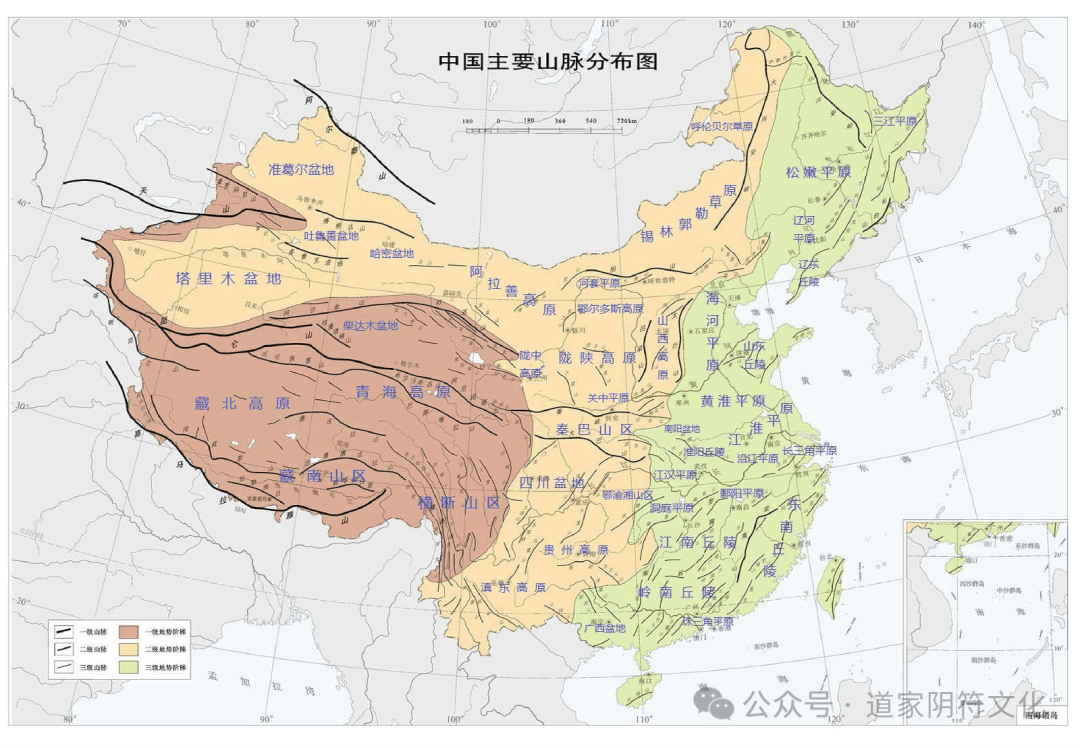
From the Tribute of Yu through the Ming dynasty, feng shui generally held that all mountain ranges under Heaven originated from Kunlun. Regarded as Mother Earth, Kunlun was said to spill energy that formed three great trunk dragon systems—northern, central, and southern. Widely elaborated in the Ming and absorbed into the state geographic framework, this theory collapses under modern geology: the mapped trends of China's ranges do not match the classical scheme, and Kunlun itself is better read as a cultural symbol than as a single mountain. Comparing the siting of famous cities worldwide—Beijing, Nanjing, Suzhou, Washington, Oslo, Stockholm, Tokyo, Kyoto, Kinshasa—reveals a common pattern of dragon and water meeting, independent of any single origin mountain.
 Feng Shui Cases
Tales of Old Shanghai through a Case from "New Cases of House Destiny": The Mysterious Incense and Candle Shop Owner
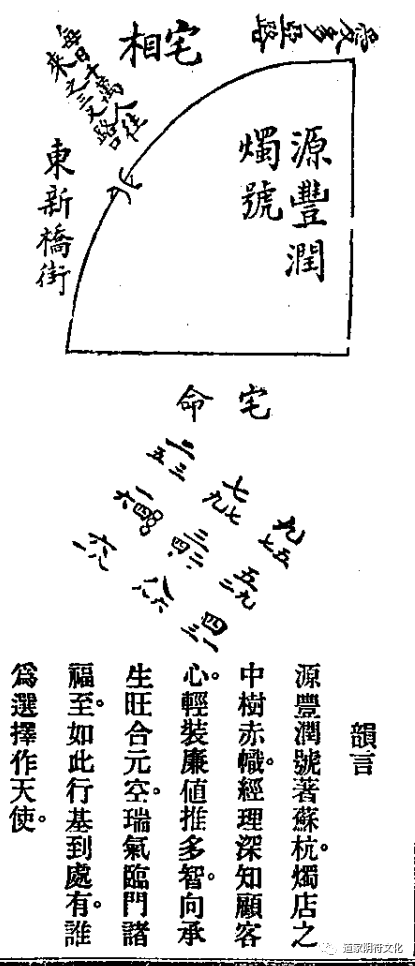
In "New Cases of House Destiny" there is a case that goes like this: the Yuanyuanfeng candle shop was built during Period Three and received prosperous qi, so business grew. Yet the story behind it is far from simple. In old Shanghai, the shop was thriving and famous — virtually a landmark. But anyone trying to learn about "Yuan Feng Run" is easily led to another figure: the renowned modern Shanghai industrialist Yan Xinhou, founder of China's first domestically run bank, the Imperial Bank of China. However, this "Yuan Feng Run Incense and Candle Shop" had nothing to do with Yan's enterprise.
 Feng Shui Cases
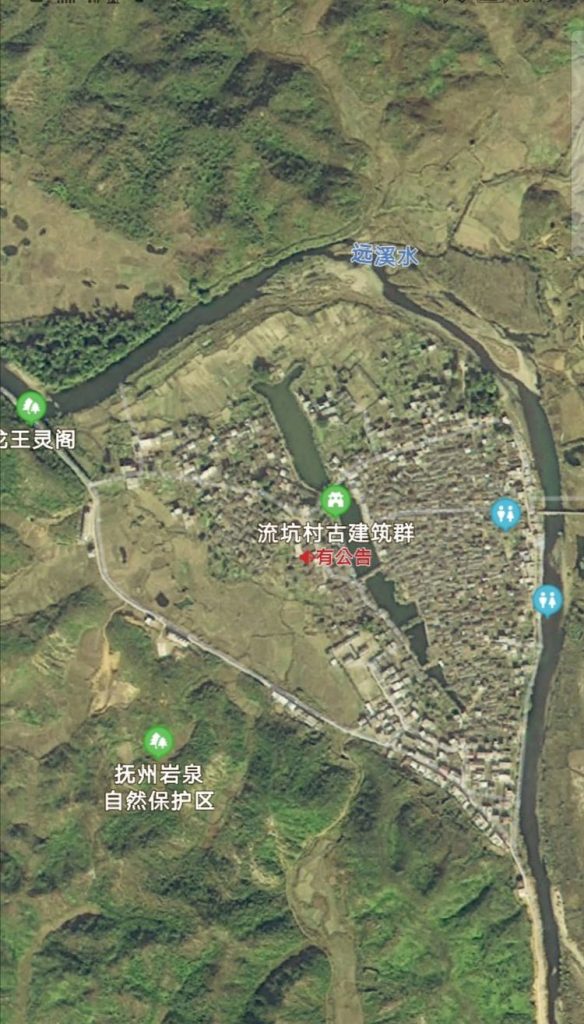
The Village Personally Sited and Designed by Feng Shui Patriarch Yang Yunsong: Liukeng, the Foremost Village of the Ages
In the Tang Dynasty, a dust-covered old man slowly emerged from the mountains, dressed in plain clothes and carrying a heavy pack, walking along a rugged mountain path. His face was lined with the marks of years, his gait somewhat unsteady, yet his eyes were firm and strong, as if telling the story of his unyielding life. On both sides of the path stretched rolling mountain ranges, verdant trees and layered peaks woven into a beautiful scroll. A gust of wind-blown dust struck his face; the old man narrowed his eyes and pressed on. Far off, a few crude thatched huts were faintly visible, surrounded by forest and streams.
 Feng Shui Cases
First a Family Massacre, Then a Fire — and Finally Becoming a Legendary Designer
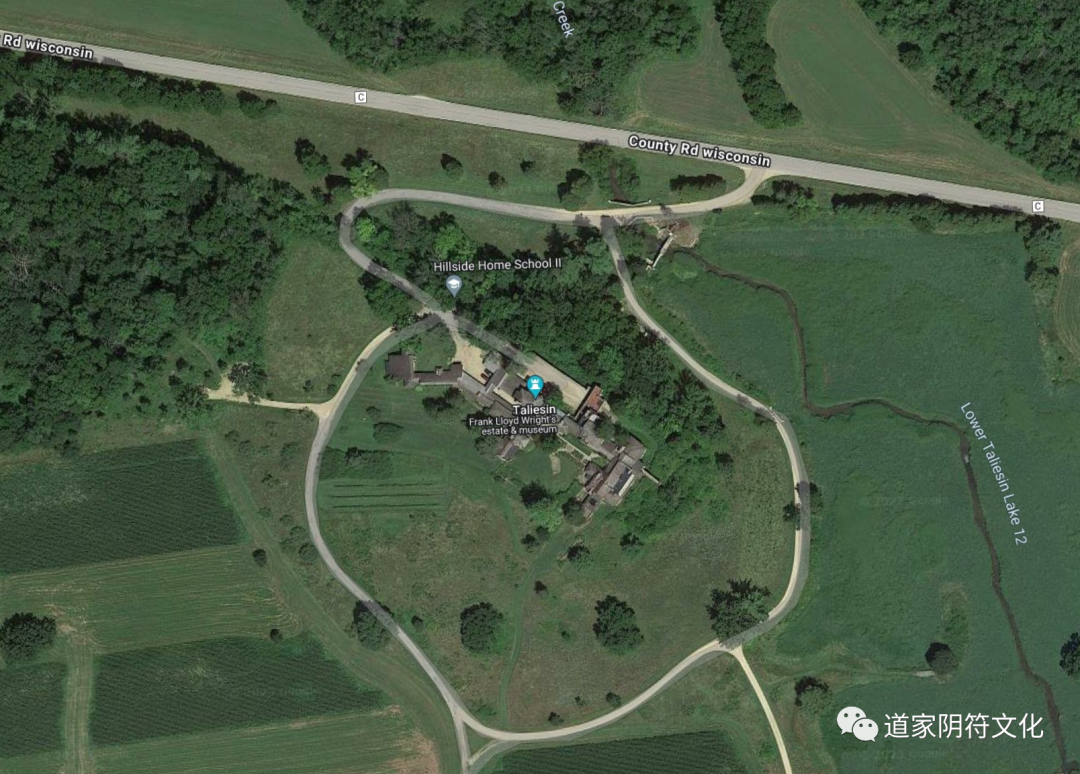
This was the residence of architect Frank Lloyd Wright. After he built it in 1911, in 1914, while he was away, the household cook massacred the family and set the house on fire. He rebuilt it — and then in 1925 a fire caused by an electrical short circuit destroyed it again. After the second fire he rebuilt once more, and from then on fortune followed him, as he leapt to become one of America's most legendary architects. Of the 1,114 works he designed in his life, 532 were reformative for the history of American architecture.
Verses on Wells Among the Twenty-Four Mountains
Auspicious: A well in the Hai direction: refined eyes and clear brows, flourishing descendants, many clever people. A well in the Gui palace: gold fills the basket; six fingers or a cleft lip; twins will appear. A well in Gen brings wealth; the people produced are worthy and filial; adopted honor-sons; fields throughout the district. A well in the Xun palace: great prosperity in wealth and emolument; the eldest branch passes the examinations; both men and women are clever. A well in the Si direction: rumors between uncle-in-law and sister-in-law; great wealth with lesser rank; the people produced are cultured. A well in the Bing direction: official emolument resounds; benevolent and filial father and son; loving brothers. A well in the Ding direction: great prosperity in descendants; wealth and emolument flourish; heroes in every generation. A well in the Wei palace: wealth, merit, and fame; fields greatly expand; the household is honored. A well in Geng brings wealth; the people produced are outstanding, brave and strong; blessings and emolument last long. Inauspicious: A well in the Qian palace: children without milk; head wind and crippled feet.
The Dragon-Seeking Verses
Version One: The Dragon-Seeking Verses inquire after the ancestors. If the ancestors are unknown, how can they be counted? Dragon towers and phoenix pavilions are the ancestors; to know their tracks and fix the direction and place can make one's own house produce the Three Ducal Ministers. One mountain goes, one mountain returns, leaving the tower and descending the hall, intent lingering. Reining in horses and stationing troops in order, escorts on both sides follow from the tower. One metal breaks, one water surges; Tianjia and Tianfu arch in opposition; Tianhu and Tianjiao rise as the dragon tower; the form seems like linked pearls rising over ridges. One wood soars, one fire flares; the nobleman's writing brush pierces the azure sky; this is the nobleman coming to set the form; layers of banners stand before. One celestial horse, one climbing saddle; both must be high and the form upright. Examine each section rising above the last; ahead where the assembly gathers, look at the dividing peaks. One branch east, one branch west; distinguish male and female in this one skill. Recognize the tracks and know the parents; ten li ahead the acupoint must be known.
Commentary on the "Essay on Revealing Subtleties"
1. Hardness and Softness Chapter. The Changes say: the Way of establishing heaven is yin and yang; the Way of establishing earth is softness and hardness. Master Shao wrote: the Way of heaven is fully contained in yin and yang; the Way of earth is fully contained in hardness and softness. Therefore the essentials of geography lie in nothing higher than hardness and softness. Hardness and softness speak of their substance. At the beginning of heaven and earth, all was like a swirling mass of sand — mountains and rivers could not yet be spoken of. Then wind and qi rubbed against each other, water and earth agitated one another: the hard stood firm alone, while the soft surged and gradually wore away. Thus mountains and rivers took form.
 Feng Shui Cases
On the Feng Shui of Liukeng Village
It was during the Southern Tang dynasty that the Dong clan ancestor Dong He is said to have discovered a place of extraordinary beauty. Legend has it that immortals once ascended to heaven here, leaving purple vapors circling for days without dissipating. Between two flanking mountain ranges, a river flows through the middle. Ordinarily, one would choose a spot embraced by hills and embraced by water; the watercourse runs from south to north, and at one point it bends around, cradling both sides. At first, Dong He had his eye on one of these embracing parcels, called White Dragon Pond. But later he met Master Yang, and Dong He naturally asked for his guidance. Master Yang pointed across to a stretch of barren, wild hillside and said, "You should establish your lineage here." Without a moment's hesitation, Dong He followed Master Yang's advice.
Glimpses Through a Feng Shui Keyhole (X)
It is commonly said that the distinction between mountain and water qi involves different jurisdictions over offspring and wealth, yet one must not cling to this rigidly. In ancient times, famous masters often used sites with mountain dragons but no water dragons, and there were cases of great wealth and honor. There were also plains that had water dragons but no mountain dragons. Thus, by the doctrine of water methods, the incoming and outgoing mouths are the gates of life and death; if they are not propitious, no calamity is greater. Some sand peaks are classified as official, killing, servant, ghost, or wealth; those that meet an auspicious pattern cannot avoid calamity, and the reverse holds for the noble as well. Resolving sand and receiving water are originally one body and cannot be separated from each other.
Glimpses Through a Feng Shui Keyhole (IX)
Among the qi-principle methods of feng shui in the world, those called "star-resolving qi principle" (aixing liqi) are for the most part spurious methods derived from the Kun-Ren-Yi formula of the Secret Words of the Green Satchel. Here we do not speak of the true, only of the false; referring to the Geography Record of Forbidden Transmissions, the list is as follows: Arrange the stars of the incoming dragon to fit the facing; from the facing arrange the stars to fit the water. Using Kun-Ren-Yi, yang forward and yin reverse, skip four positions to begin at the original position, or skip four positions to begin at the parents, or enter the nine-palace palm with yang forward and yin reverse. The nine-palace palm, yang forward and yin reverse, reverses from Wenqu...
Commentary on the Song of Wondrous and Strange Dragon Caves
The true dragon hides its wondrous cave in strangeness—how could ordinary eyes ever love it? Heaven's treasures and earth's secrets are governed by spirits; guidance awaits a clear-sighted master. The clear-sighted master discerns the arcane formulas but dares not speak the secrets. Fearing that your karmic affinity and fortune may be slight, pointing it out would only cause alarm and doubt. Land has marvelously skillful forms and also ugly, clumsy ones—all are called strange caves. Skillful means the cave form is beautiful yet wondrous, its position making people doubt. Clumsy means the cave form is hideous and plain, leaving one hesitant to begin; the adept's creative workings are held within the breast, and skillful means are fully understood as arcane.
Glimpses Through a Feng Shui Telescope (VIII)
As one who studies geomancy, one should first know what makes a site false. What is meant by false? At the peaks: the star peaks stand exposed alone, swollen and steep, bearing killing force. At the dragon: at the mountain pass, wind blows and water cuts, and the sands and waters turn their backs. At the head: the more it turns, the coarser it becomes, and the dividing waters fail to separate. At the vein: the incoming vein has no ridge, withering and slack, lying broad and flat. At the waters: the four waters scatter and wander; though there is a bright hall, the source waters never arrive. At the hall: though there are converging laps, on close inspection they fail to form the five-element star forms.
Glimpses Through a Feng Shui Telescope (VII)
At Qilu Mountain I visited the site traditionally attributed to Master Yang's burial work for the Zhang clan, said to take the form of a swan descending into water. An old legend holds that Master Yang ordered the Zhang clan to have eighteen bare maidens carry earth to build the tomb, but when work began, Master Yang stood by laughing; the patrons thought they were being mocked, so the women stopped after carrying only one load each, leaving the site insufficient. This account is largely unbelievable, with many doubtful points; the tomb is so large that if eighteen bare women were truly ordered to carry earth, how could they simply stop at will.
Glimpses Through a Feng Shui Telescope (VI)
Broadly speaking, those with a tradition in geomancy are mostly unwilling to do feng shui for outsiders—this is the true state of affairs. Human fate is limited; even for those who possess the art, constrained by the turns of fortune, half a lifetime of striving yields at most a small site. As for great earth sites, one may be able to see them, but not necessarily obtain them. Across the vast wilderness, where no one goes, and wherever human settlement reaches, buying a plot for a tomb costs a sky-high price. Thus the ancients said that great sites can only be obtained by those with the right affinity—there is reason in this. Yet if one cannot obtain them oneself, how can one freely give away wealth and rank to others? And it is not something that a mere sum of money can measure. Therefore, for relatives and friends—one does not do it; for outsiders—one does it even less.
Glimpses Through a Feng Shui Telescope (V)
I recall that more than ten years ago, someone asked about his future fortune. I observed it briefly and told him he might make an investment four years hence, so I advised him: there will be no major gains in the next three years—simply work steadily; only after the fourth year is it worth attempting. Unexpectedly, this person later studied Purple Star Astrology and became somewhat accurate in readings, and he also self-taught Qimen Dunjia for adjusting feng shui, achieving modest results, so he grew quite self-satisfied. In the fourth year, he raised a large sum from relatives and friends to go into business with someone—but that partner was suddenly arrested; the man owed countless debts, and the funds in his accounts were entirely frozen, leaving his wealth wiped out. Later he came to ask how things had come to this; I was too weary to explain.
Glimpses Through a Feng Shui Telescope (II)
When I was once in the Guangdong region, I often heard people say that some family had invited a master whose burial site turned out truly auspicious, and someone in the family became a university student—I was left speechless. Others would claim a certain site was excellent: the incoming dragon leaves the tower and descends from the palace, escorted with power, noble and extraordinary; the dragon formation was vast and beautiful, and a site was ultimately formed. Their accounts were extravagant, yet upon examining the cave, it produced only a bureau director or similar. Such claims mostly stem from untrue arts and absurd words. Consider: the dragon travels a thousand li, rising and falling, winding and inheriting, covering thousands of miles—yet if it only produces this, why bother discussing feng shui at all? Broadly speaking, one could casually seek any site, and as long as it is not cut by wind or robbed by water, even without ever forming a cave, one could produce such results.
Glimpses Through a Feng Shui Telescope (I)
Though I have studied many schools, what I ultimately put into practice and found truly effective still comes from the Yinfu school. The various arts in the marketplace, some with rather profound principles, I have studied for years and paired with various secret formulas, yet mostly left me disappointed; those with any accurate effect were few, though some merit consideration. To assess them: Golden Lock has the power of verification but lacks transformation; Dunjia has miraculous swift results, yet rebound effects follow; the Four Great Formations of Sanhe are reliable but rarely seen in practice; the intercourse of Sanyuan is but a beginner's stumbling; Heavenly Father and Earth Mother is slightly better than blind guessing; Pure Yin and Pure Yang often conflict with the writings of clear-sighted masters; Shen's Flying Stars should never be used for yin dwellings; the Six Methods' theories are arcane yet impractical; there is also what is called Great Xuan Kong, which merely resembles Sanyuan qi reception and often fails verification—it is no more than a flying method applied through the Kun formula, seeming reasonable but yielding very slight results. There are also the Heluo water methods, whose principles are elaborate and complex, sometimes matching; further, techniques like the Pot-Ghost hexagrams, Plum Blossom alone, the Central Fire Two Stars, and constellation-based sand elimination, though commonly seen, mostly fail to match.
Brief Notes on Kanyu
In the way of kanyu (geomancy), worldly masters often speak of observing form; those slightly more advanced tend to speak of reading qi. As for the art of reading qi, some speak of five colors and seven hues, with no universal agreement. Though slightly touching on reality, most of it is mere mystification. Such masters fail to realize that observing qi is observing form, and observing form is observing qi — yet the subtlety lies in the principle (li). As the Qing Nang says: principle resides in qi, and qi is confined by form.
Doubts About the Guanyin Looking at the Sea Tomb at Sanliao
The Zeng family of Sanliao has an ancestral tomb named, by form-reading, "Guanyin Looking at the Sea." It is said that the Zeng ancestors had single heirs generation after generation; after this tomb was buried as Guanyin Looking at the Sea, the family fortune gradually prospered and there were no more single-heir generations, and they multiplied to the present. However, careful examination of the Zeng family genealogy shows otherwise...
A Far-Fetched Case in the Secret Judgments of Yang Dwellings (Yang Zhai Mi Duan)
Case Eight: The Ren Residence of Kuaiji. Sitting Zi-Wu兼Ren-Bing. Period Seven. Master Zhang's judgment: The ground in front is high, a great river behind; water light appears in the Qian, Kan, and Gen directions; a large locust tree behind reflects water in a sheet of green; the house interior is mostly dim. Those who dwell here have both progeny and wealth flourishing, because Double Seven arrives at the rear, with the great river behind. Yet in the house there is a female ghost in green clothing, appearing at the shen hour. At the beginning of Period Eight, Master Qian opened a door in the wei direction, and since then the ghost has not appeared.
Zi, Gui, and Jia-Shen Together: Tanlang
Zi, Gui, and Jia-Shen together — Tanlang walks the whole way. Ren, Mao, Yi, Wei, Kun — the five positions are Jumen. Qian, Hai, Chen, Xun, Si, connected with Xu as Wuqu named. You, Xin, Chou, Gen, Bing — the heavenly stars speak of Pojun. Yin, Wu, Geng, Ding above — Youbi arrives as the fourth star. Lianzhen returns to the five positions, as all stars move forward or in reverse. Some say these six lines may come from Jiang Yao's Notes from My Teacher, a disciple of Jiang Dahong, yet the provenance of that work is itself quite suspect and cannot be fully trusted.
Geographical Disambiguation: Same Sitting, Facing, Sand and Water—Yet Different Judgments
Question 69: Yesterday we toured three sites whose sitting, facing, sand and water were all the same. Why is one said to bring slow wealth and slow decline; one said to bring wealth and rank but unfilial descendants; and one said to bring wealth and rank but impure womenfolk? I asked afterward, and all were so—where does the judgment diverge?
The Unified Logic of Clockwise and Counterclockwise Reading of the Sixty-Four Hexagrams on the Circular Diagram of the Compass
In the circular diagram of the sixty-four hexagrams, the reading order from the bottom line to the top line is not uniform. The prescribed order takes Kun as one, Xun as two, Li as three, Dui as four, Gen as six, Kan as seven, Zhen as eight, and Qian as nine. Qian, Kun, Kan, and Li form one group; Zhen, Dui, Xun, and Gen form another — that is, when the bottom and top lines are identical they belong to one group, and when different, to the other. When the lower and upper trigrams of a hexagram belong to different groups, the reading goes clockwise from the bottom line to the top; when they belong to the same group, it goes clockwise from the top to the bottom — this conceals a subtle logic.
 Feng Shui Compass School
Several Key Points of the San He School of Feng Shui
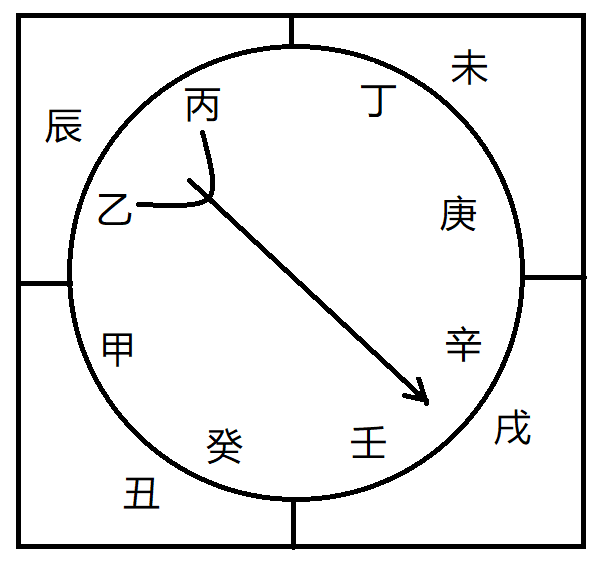
Regarding the use of the Heaven and Earth plates, the San He school has long had many disputes. For example, some say the sitting-facing direction should use the Earth plate while others say the Heaven plate — this stems from not having clarified the concepts of the plates. The Heaven and Earth plates are actually two different coordinate systems. San He feng shui takes four major mnemonics as its guiding principles, namely: Xin and Ren meet and gather at Chen; Yi and Bing cross and hasten to Xu. Dou and Niu receive the qi of Ding and Geng; the Golden Goat gathers the numinous of Gui and Jia. As for "Yi and Bing cross and hasten to Xu," from Dou/Niu and Golden Goat this is clearly a concept of the Twenty-Eight Mansions; many people therefore associate the Heaven plate with this, but that is not actually the case — as shown in the diagram, if one follows the traditional Twenty-Four Mountains, for example the midpoint of Zi is where Ren and Gui meet, which is extremely awkward for expression.
The Flying-Star Method of Shen's Xuan Kong
Later learners of Shen's Xuan Kong often call themselves the Wuchang school of Xuan Kong, claiming transmission from Zhang Zhongshan — but in fact they have nothing to do with Zhang Zhongshan's method. What is more, Shen Zhureng did not actually finish his feng shui book before he died; whether some of the statements in the book were later altered or changed is unknown, and much of the content was supplemented and refined by later people. There are often cases where judgments verify but implementations fail; relatively speaking, among many feng shui arts this is one whose event judgments based on deriving the formation from mountain and facing are relatively reliable. Because this method has circulated quite widely, according to overall practice it is almost useless for yin dwellings (graves); yang dwellings can use it, but if used alone it is only marginally better than nothing. For events that have already occurred there is a small degree of accuracy, but if used alone it does not verify — so feng shui is often combined with other feng shui arts, and generally one can achieve about sixty to seventy percent accuracy; with rich experience the accuracy can be somewhat higher.
 Feng Shui Compass School
A Critique of Qiankun Guobao — The Water Methods of the Eight Dragons of Longmen
The Eight Dragons of Longmen, also known as Qiankun Guobao (National Treasure of Qian and Kun), centers its theory on sitting and facing directions to deduce auspicious and inauspicious conditions across the eight sectors, combined with the Eight Sha as Yao. In essence it is an extension of the Earlier Heaven and Later Heaven water methods plus assorted formulae; many practitioners encounter this theory early in their studies.
 Feng Shui & Geomancy
A Feng Shui Orientation and Dragon-Finding Tool for Yin and Yang Residences in Urban Settings
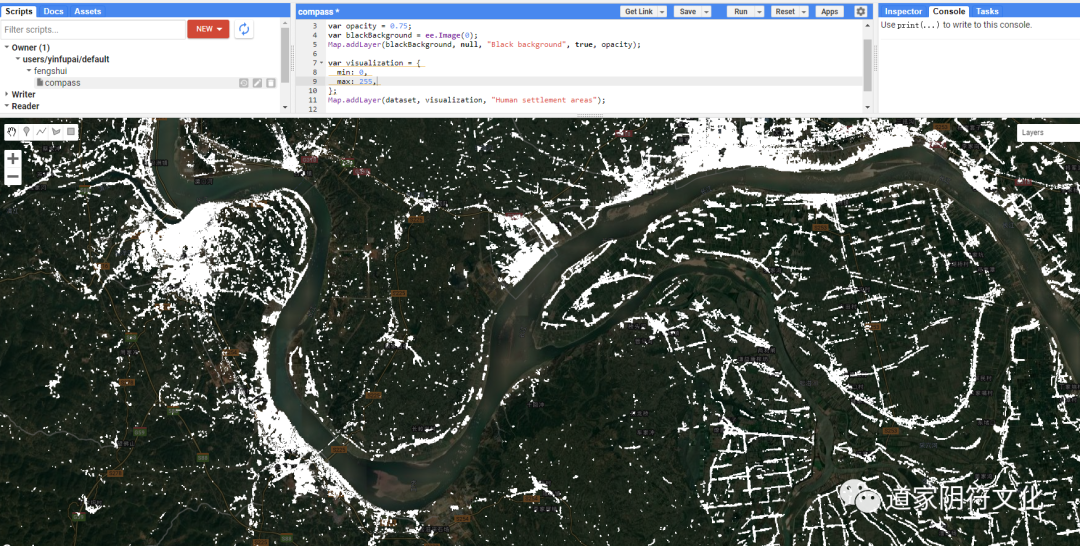
In earlier years, when studying feng shui, this Daoist priest used Google Earth Engine, which hosts large geographic datasets and can be quite convenient for research — just a few lines of code to use data already analyzed by others. For example, one can study the most frequented activity areas of a district and pair that with field surveys to uncover many interesting findings: places on a reverse-bow bend tend to attract more people — why is that, and how does living there affect them? Another application: whenever one mentions Dongguan's second-wealthiest village, one must mention the Li Clan Ancestral Hall built by Lai Buyi.
On the Placement of Toilets in Commercial Yang Residences
In yang-residence feng shui, the position of the toilet is seldom discussed; here is a brief account. In general, the Ren-Zi-Gui and Qian-Hai directions are least favorable first; Kun, Zhen, and Xun are also not considered favorable. If there is truly no alternative these may be used slightly, but the direction must be one overcome by the sitting mountain — for example, if the sitting is Mao, Geng and Shen are in a rest-and-decline state; one may place the toilet at the Geng position, avoiding the earthly branch to prevent offending the Year Spirit. In addition, the Yellow Spring Sha directions are also unfavorable for a toilet and must be carefully determined, otherwise many strange illnesses may arise.
Recorded Cases of Self-Practiced Feng Shui Bringing Fortune
Ding Mengzhang of the Ming dynasty lost his mother in youth and failed to secure an auspicious burial site. Legend has it that a divine person bestowed upon him the secrets of earth geomancy; he thereby mastered the principles of mountain and river forms and configurations. Later he chose his own burial ground, becoming the illustrious founding ancestor of the Ding clan of Yimen, a great lineage of Huaining. To this day, for over six hundred years, the clan has flourished with abundant descendants and a thriving literary tradition. It was once said that he wrote a work called True Essentials of Luojing Absorption and Resolution, but it has never appeared in the world; only Ni Huanan, in his own writings, compiled Ding’s method of the Sixty Dragons Dividing the Gold. Master Shen Chang is Shen Hao, a man of the Kangxi era. In his youth he lost his father early and was poor, so he studied the classics, histories, masters, and collections, and also practiced feng shui...
Kun, Ren, Yi
Kun, Ren, Yi — the Wen Qu star emerges from the start; Gen, Bing, Xin — every position is Lian Zhen; Xun, Geng, Gui — all are Wu Qu positions; Qian, Jia, Ding — Tan Lang travels the whole way. The foregoing formula is thus recorded.
 Feng Shui Cases
A Joint Analysis of the Tombs of Sun Yat-sen's Mother, Lui Lok's Ancestral Tomb, and Cen Qingqian's Tomb
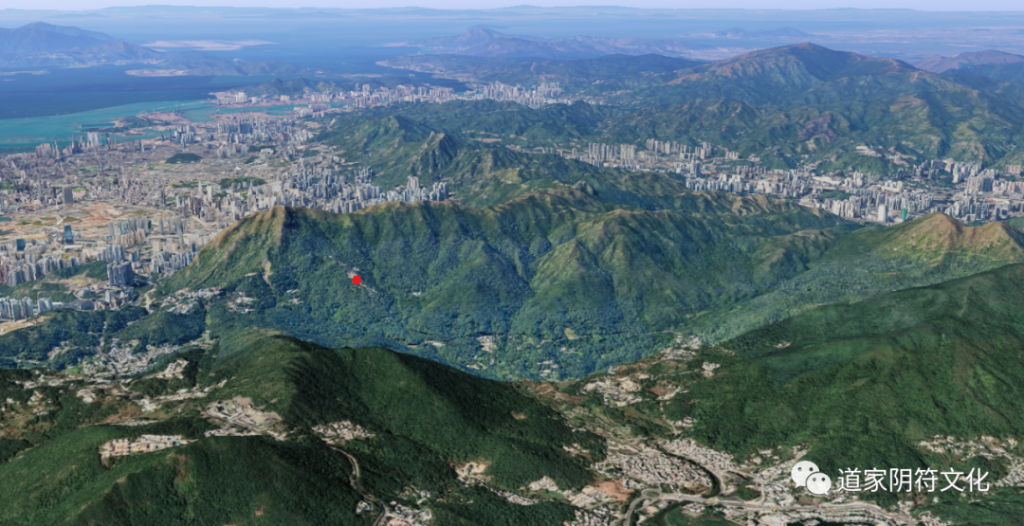
In Pak Fa Lam (Baihualin), Hong Kong, there are several famous cemeteries. One of them is the tomb of Sun Yat-sen's mother, hailed as the foremost of Hong Kong's ten great tombs, an excellent feng shui site. Mr. Sun Yat-sen needs no further introduction—his renown was illustrious—yet he lived in modest poverty; his son once held office but was also rather poor in later years; though none of his descendants achieved great things, they lived in safety and enjoyed considerable ancestral blessing.
An Ancient Tomb in a Certain Place, Yiwu, Zhejiang
An ancient tomb in a certain place, Yiwu, Zhejiang: before the tomb a pond backs the water; beyond the pond, water from the valley fields rises tier by tier toward the tomb, and the tomb faces that direction. The distant field waters fall level by level, bowing toward the front of the tomb. They bow down to below the pond; though the water mouth is broad, standing in the tomb one cannot see the water exiting. When first planted, the third son suddenly prospered, wealthy and eminent throughout the county; later a tribute scholar emerged; through the third generation down to the sixth generation the family remained rich. Because the Xu–Qian water matched the landform, and it also fell in a timely and auspicious cycle, it prospered quickly and endured long. Had the landform not been of this kind, even a sitting on Chen facing Xu would have prospered for only twenty-some years at most, and decline could not be avoided. This landform is exceptionally fine, and further accords with the Nine-Star Water Method; prosperity is therefore naturally long-lasting. The third branch received the long sand and was vigorous, so after growing wealthy a tribute scholar also emerged.
On Prognostic Signs in Geography: The Son of Man's Essential Knowledge
Prognostic omens and signs are largely no more than the artifices of occult practitioners exploiting this supposed divine art. Gentlemen who fail to examine them often fall prey to these arts. How easily heretical doctrines beguile! It is said there are two kinds of prognostic signs. The first holds that a few feet beneath the burial point there lies some object of a certain shape and color — what are called dragon liver, phoenix marrow, orangutan blood, crab fat, ivory, dragon bone, tiger amber, cinnabar, silk red, jade green, and the like. The Jade Marrow Sutra holds that a dragon form has flame-stone, a phoenix form has red-yellow stone, a tiger form has tiger-might stone, a lion form has ball stone, an elephant form has golden-star stone; likewise a general's great seat has a sword and a beauty at her toilet has a mirror. Cui Jupo said that ordinary people who suddenly encounter this doctrine will inevitably be startled and become rigidly attached to it, yet one cannot say there is no principle in it. If one clings to it as a constant method, however, that is another matter; there is some basis for such observations.
 Feng Shui Cases
The Secrets of British Feng Shui — The Palace of Westminster, London
The Palace of Westminster in Britain, also known as the Houses of Parliament, was selected by the United Nations as a World Cultural Heritage Site in 1987. The palace has a tall tower at its southwest corner and another at its northeast corner. Situated on the banks of the Thames, it has been the seat of the British Parliament since 1547. Because Britain is a constitutional monarchy and all major decisions are made through Parliament, this is the feng shui heartland that influences the entire fortune of the nation. On 16 October 1580, William Borrough made observations at Limehouse in London and found the magnetic...
 Feng Shui Cases
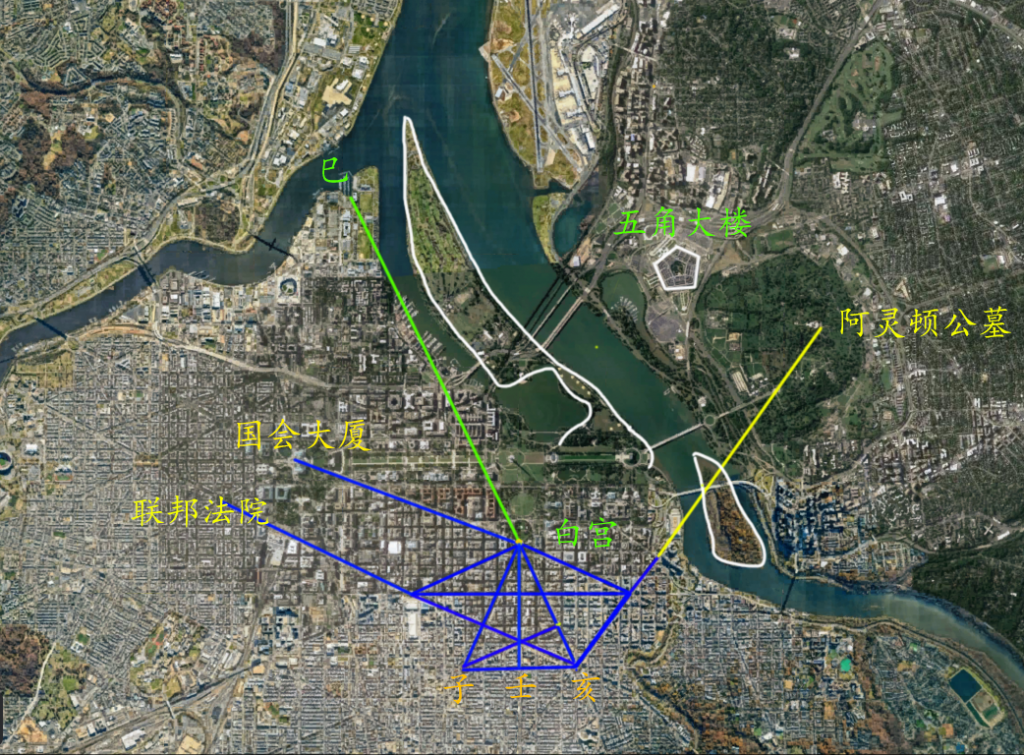
Those Born in the Year of the Snake — Die? — A Brief Discussion of the Feng Shui of the White House in the United States
There is a version online of the Chinese zodiac signs of US presidents, but unfortunately it assigns the signs by the Chinese lunar calendar; in fact one should calculate by the sexagenary stems-and-branches. The most typical case is Abraham Lincoln, born 12 February 1809 — that year Chinese New Year fell on 14 February, yet the solar term had already changed on 4 February. By the stem-branch calendar, he is undoubtedly a Snake. Ox: 4 — Gerald Ford*, Warren Harding, Chester Arthur, Barack Obama. Tiger: 4 — James Monroe, Martin Van Buren, Dwight Eisenhower, William McKinley*. Rabbit: 3 — John Adams...
An Example of Reading Feng Shui
House orientation: sitting Yi, facing Xin, zhou-tian 101 degrees, first line of the Decline hexagram (magnetic north). The compound has two entrances, in the Geng and Wu directions; daily use is mostly the Geng entrance. Qian: Ji-Chou. Kun: Jia-Wu. Daughter: Ren-Xu. According to the classical method, the Xin–Geng direction is the Resting Position, and the Wu direction is Heavenly Doctor. With 8 entering the center in 1992, 9 Purple reaching Dui poses no obstacle. Counting forward: in 1995 the man was tabooed as Severed Fate hanging to Dui; in 1996 the Wandering Soul again reached Dui, and the annual 6 reached Dui, hence loss of work. Also only in 1997 the 5 Yellow reached Dui, fortunately rescued by Generating Breath; in 2003 Severed Fate came again, 8 reached Dui, and the Five Ghosts and Severed Fate together...
113 posts