Toei Kagoshima (1): Feng Shui of Kirishima Shrine
Just before the Bailu solar term, a typhoon had only just swept past southern Japan, and the weather was affected as well. With wind and rain accompanying us, the forecast was poor—perhaps followed by a less-than-pleasant journey. Yet everyone traveling together was quite optimistic, saying that when noble people travel, wind and rain must accompany them.
This wasn't merely self-flattery. Before this trip, a student studying in Tokyo also joined, and went to Senso-ji, the temple enshrining Guanyin in Japan, to draw a fortune slip. The verse that day went:
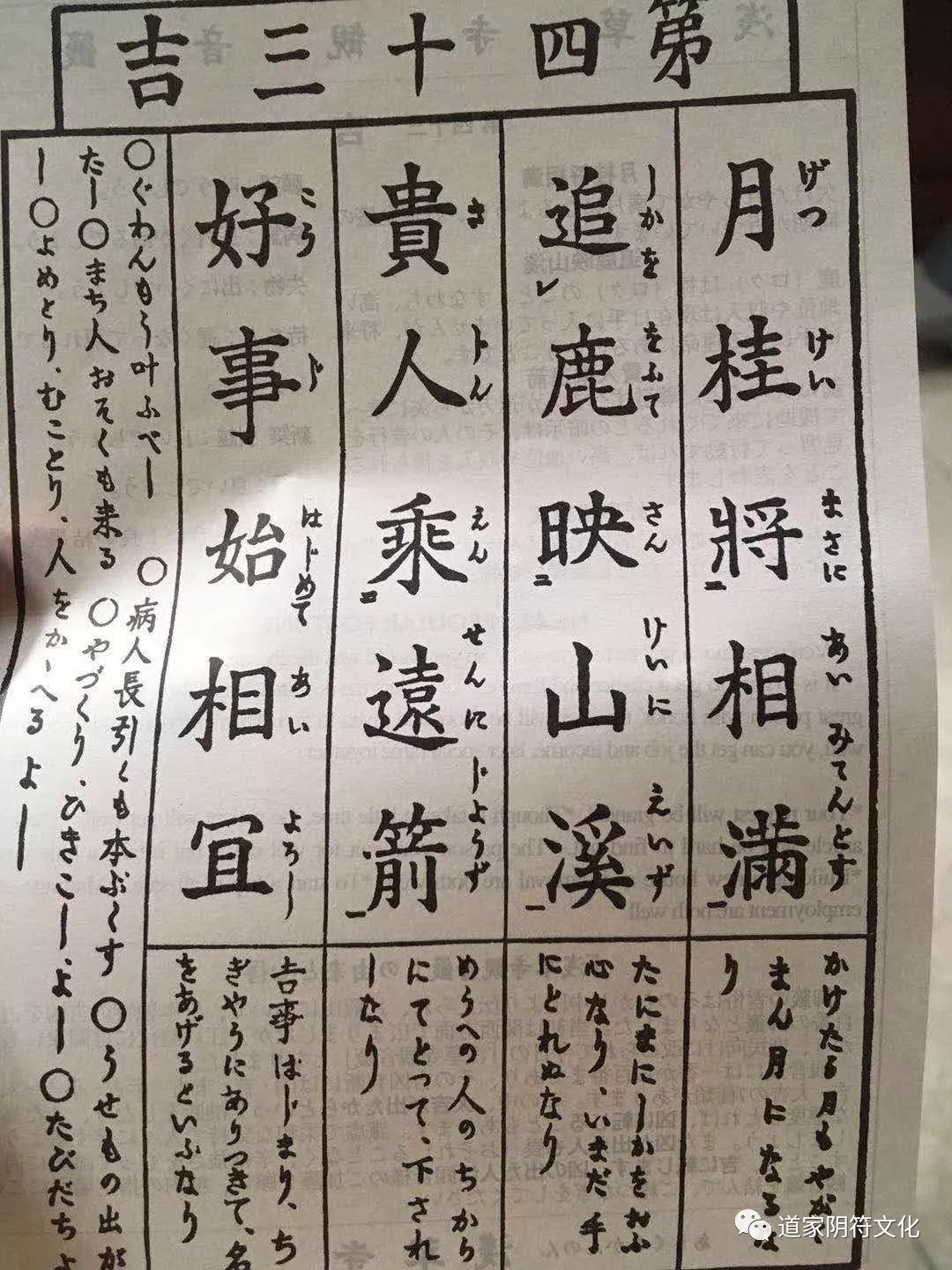
When the moon is full, dew turns white—just the Bailu season; chasing the deer means going to Kagoshima; mirroring the mountain stream fits qi-gathering exactly; and the noble person rides a far-flying arrow, naturally by airplane. “Good things will be as they should be”—no doubt the outcome will be good.
Since Cihang Dazhenren had already given such an omen early on, everyone naturally had no worries at all.
Thinking back, it was the same on the last trip to Tengchong: rain fell continuously for over a month. Yet the moment everyone arrived in Tengchong, it gradually cleared up, letting us photograph the most beautiful scenery at the most fitting moment; and precisely because of the rain, there was otherworldly scenery rarely seen on ordinary days.
Moreover, everything depended on the patriarchs' protection—there was even less to worry about.
Only after landing at Kagoshima Airport did we learn that the plan was to go straight to Kirishima Shrine. Honestly, this humble priest not only felt extremely surprised by the arrangement, but deeply dissatisfied.
This wasn't a pure tourism outing: first, no one had studied feng shui, and second, no one had studied qi-gathering. Why go straight to Kirishima Shrine?
But if we had demanded changes to the itinerary right then, it would easily have thrown the later arrangements into chaos.
Coincidentally, when boarding the bus, heavy rain suddenly began, so the itinerary could only change. Everyone went to the hotel first, and in the afternoon this humble priest conducted a class for everyone, explaining the core techniques of feng shui.
Japanese hotels are generally quite cramped, but since we had chosen top-tier hotels in Kagoshima in principle, the room on the first day was quite large, and we could arrange for everyone to have class right in the room—quite convenient.
As the saying goes, true transmission takes one sentence, false transmission ten thousand volumes. In fact, covering the core is very fast; and what was even more fitting, just as we finished the lecture, the rain stopped.
Seeing that there was still ample time in the afternoon, everyone took up their compasses and headed again to Kirishima Shrine—just right to put into practice what had been learned.
This was probably an arrangement bestowed by the patriarchs in the unseen realm.
Kirishima Shrine is, in Japanese legend, the place where the Heavenly Grandchild descended. The present site was actually built later. The earliest construction stood between Takachiho Gorge and Mt. Hinokiboramaru, but was destroyed by volcanic activity, so in 1484 it was rebuilt here on the order of Shimazu Tadamasa. It was later destroyed by fire several times again, and in 1715, Shimazu Yoshitaka built it into its present form.
Because in Japanese legend the Emperor of Japan is a descendant of the Heavenly Grandchild, this is an important place of worship, and the Emperor comes here to conduct rites every few years. In a sense, Kirishima Shrine can be considered the ancestral shrine of the Japanese imperial family.
For everyone to collectively take compasses and take readings at the ancestral shrine of the Japanese imperial family—this was probably the first time in global history.
Approaching the shrine, the first thing one encounters is the spirit-inviting tree.
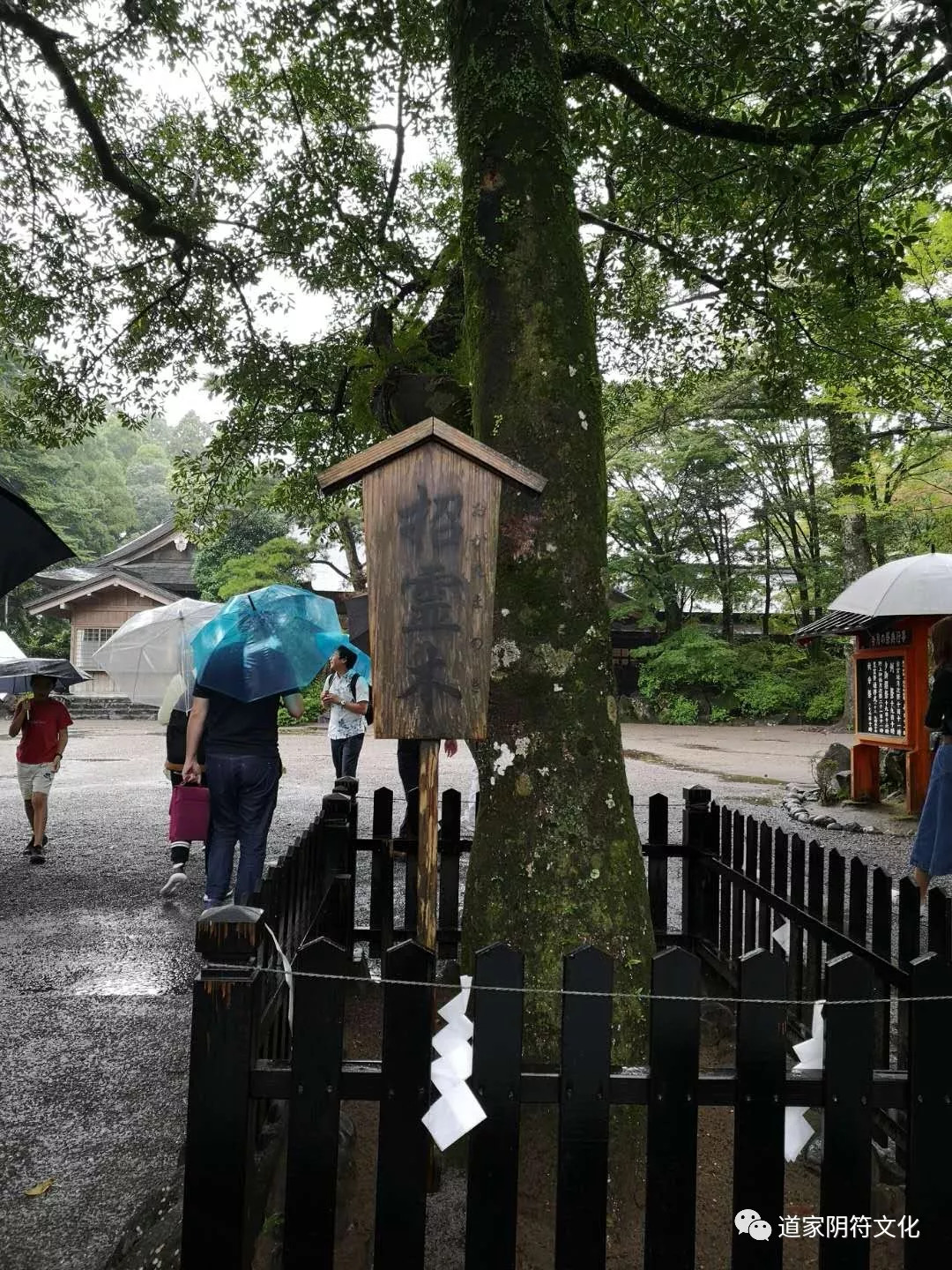
This spirit-inviting tree is quite famous. I heard that the image on the back of the 1-yen coin is it, and ancient Japan often used spirit-inviting trees in Shinto ceremonial activities.
Because spirit-inviting trees usually stand straight toward the heavens, as if summoning the gods, they are also regarded as the objects in the world where the spirits dwell. This kind of tree worship has countless threads of connection with shamanic belief in primitive religion.
In some regions' shamanic transmission rituals, cloth is also used to tie knots in a great tree, with the other end connected to a tent; through certain rites of summoning, at night the spirits bestow power, and those dwelling in the tent receive the power of spirit-mediumship.
And in Japanese customary Shinto ceremonies, people typically dance holding spirit-inviting trees—this also resonates quite closely with what primitive religion calls “summoning the gods through song and dance, and pleasing the gods through a shaman's words.”
Contrary to imagination, the shrine is not a large enclosed palace; most areas are open-air, and the core altar is placed directly before visitors for worship.
Japanese shrines are all like this—only shrines connected with the Emperor are called jingū. Most are open-air grounds, and not large in area.
Because there were many visitors, it was hard to find a good photographic angle, so we could only take one overall shot.
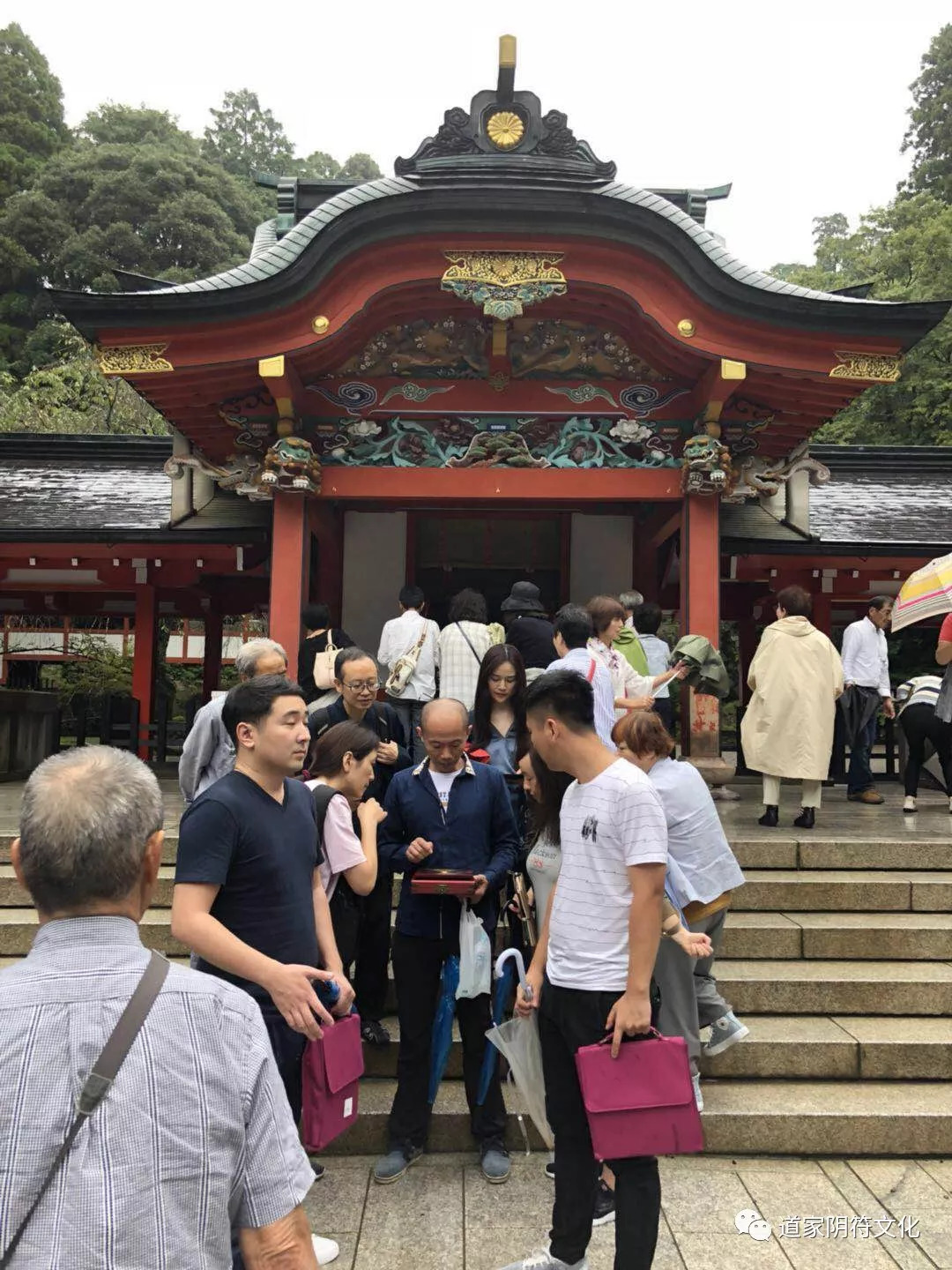
When measuring with the compass at the entrance of Kirishima Shrine, some local Japanese were also curious and came over to watch what everyone was doing.
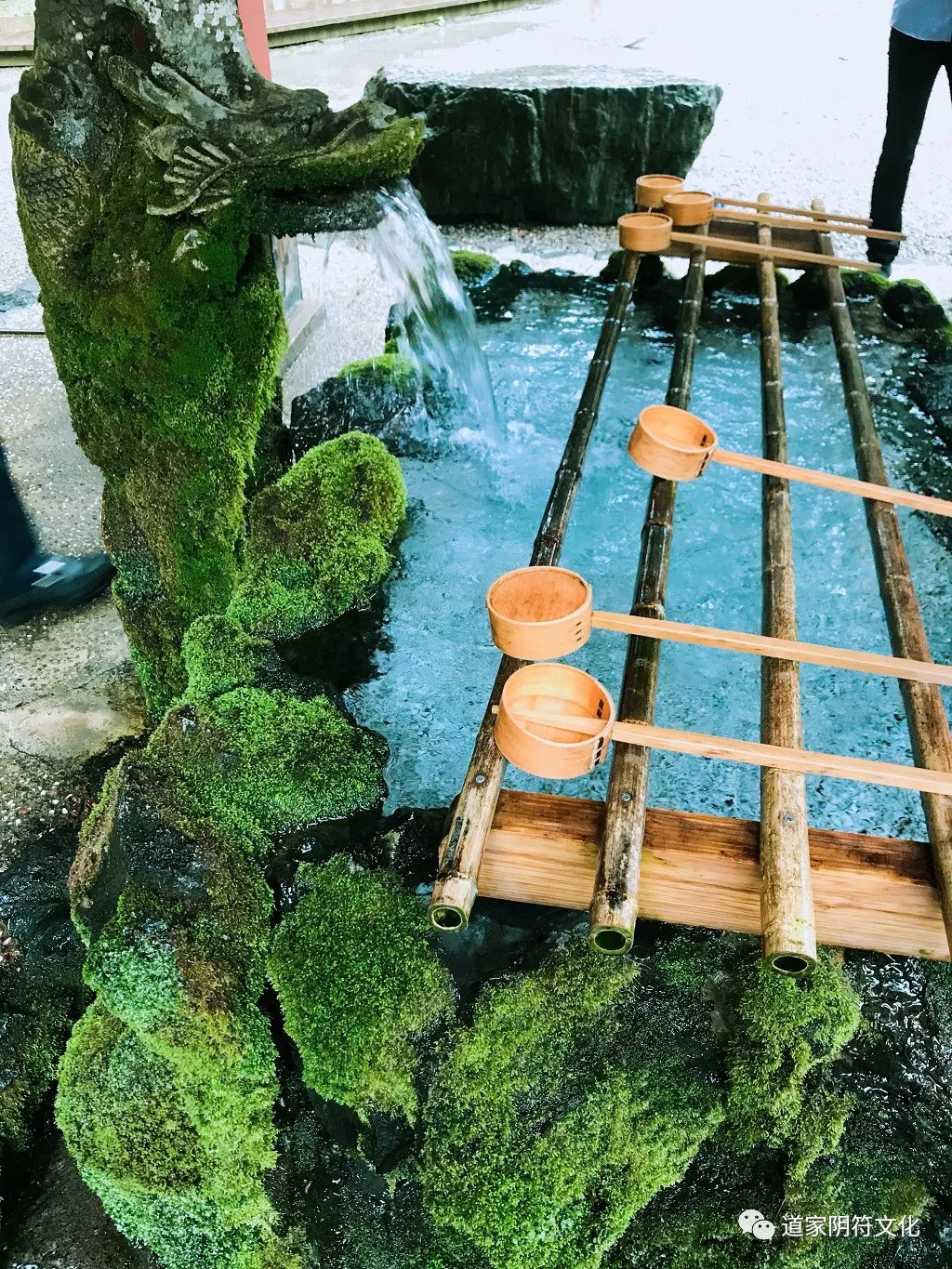
Kirishima Shrine faces Shen with a slight lean toward Geng. There is a pool in the Ding direction, equivalent to a water outlet, with very clear water.
This is a place for visitors to rinse hands and mouths. According to Japanese etiquette, before worshipping at either a shrine or jingū, one must first purify the hands, the mouth, and the heart—this very likely comes from the influence of Chinese Daoism.
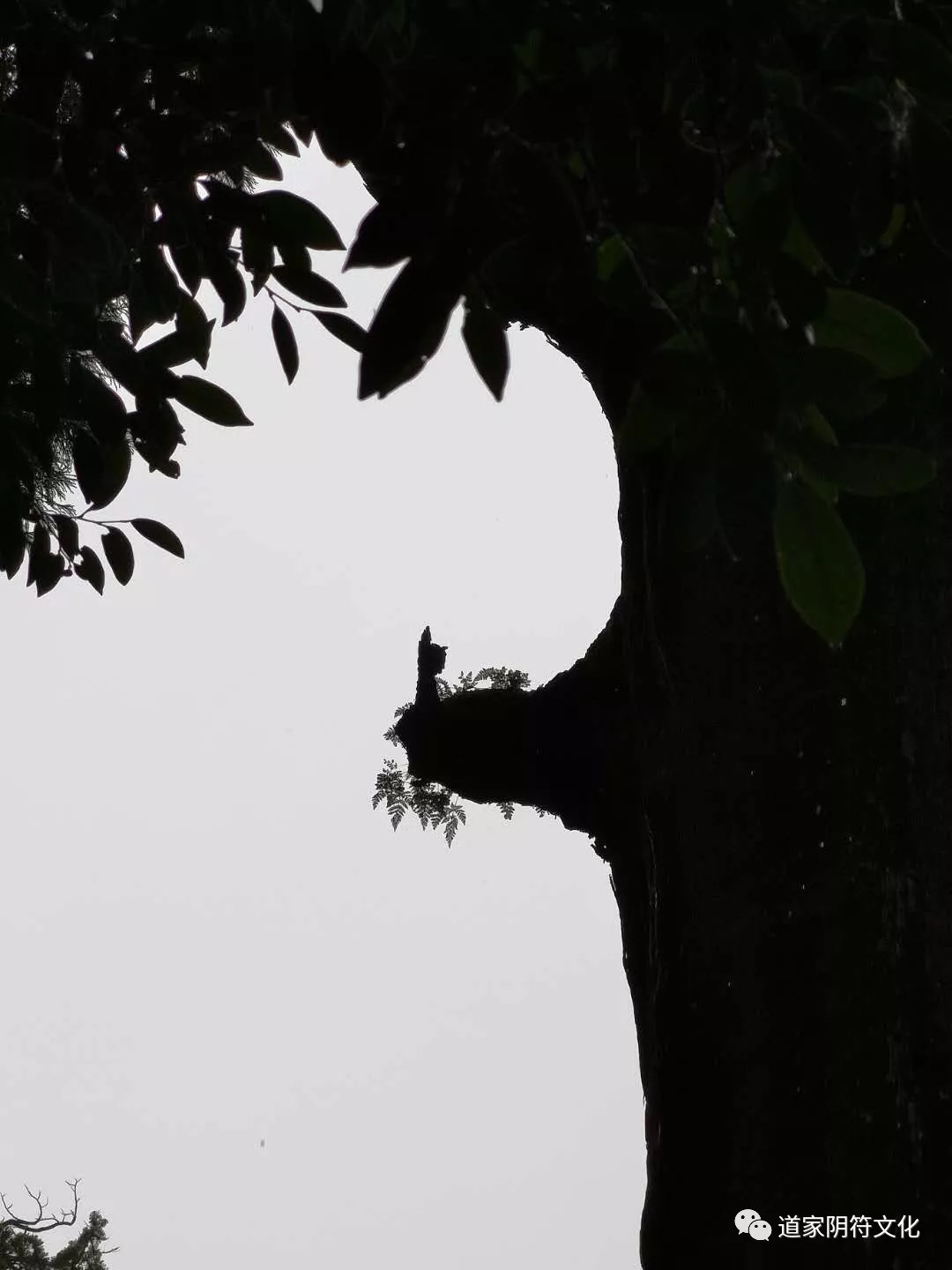
Further in the Ding direction stands Kirishima Shrine's most famous sacred tree, upon which is a naturally formed human figure that looks as if it were wearing a long robe and bowing toward the shrine—regarded by locals as a divine miracle.
If you stand at the shrine entrance and look, half the tree lies in the Ding position, exactly within the field of vision not blocked by the pool, forming this human figure. This position accords precisely with the data calculations of star-applying feng shui, in a position that aligns perfectly with the shrine itself.
In fact, long before coming to Kagoshima, I had heard of this tree, and had conjectured whether it should lie at a point where feng shui properly aligns with the mystic aperture. Coming here this time, it was indeed verified.