The True Theory of Holography—What Everyone Understood Before Was Wrong
Holographic theory is a foreign term, first developed by Canadian physicist David Bohm in the 1950s.
But ancient China already had the concept of "one thing, one taiji," yet its description is not easy for modern people to grasp. Therefore, in applications of the numerological arts, to explain certain phenomena, holographic theory is usually introduced, and practical operations are carried out under this theoretical guidance.
For example, for what diseases correspond to what parts of the body, some people invented holographic acupuncture on the palm or abdomen following the bagua pattern—yet such operations often work poorly in practice. Why?
This does not mean the theory itself is flawed, but that the way it is used is flawed.
If you look up general introductions to holographic theory online, they will all say that holographic theory means every tiny part of any system contains the information of the entire system.
This is actually quite misleading, because the true holographic theory contains two key points: holography and implicate order.
Let us explain the two concepts separately:
Holography
The universe and reality form an indivisible, mutually interconnected whole, not composed of separate parts. According to holographic theory, every tiny part contains the information of the entire system, so everything in the universe is interrelated with everything else. This means any phenomenon or event reflects the information of the whole universe, so we can understand and explain reality at both microscopic and macroscopic levels.Implicate Order
Although the universe appears chaotic and random, there actually exists a hidden order or structure. This order may not be easy to perceive, but it exists in the deeper levels of reality and determines how matter and phenomena present themselves. By studying this implicate order in depth, people can better understand and predict phenomena in the real world.These two concepts are interrelated and cannot be cut apart. Once separated, it actually becomes absolute holography, and many errors follow.Examples typically used for holographic theory can be illustrated with concepts such as fractals.The simplest fractal idea is that complex shapes can be formed by repeatedly iterating the simplest formula.For instance, the self-similarity of coastlines, or of snowflakes, and so on.
Self-similarity of coastlines
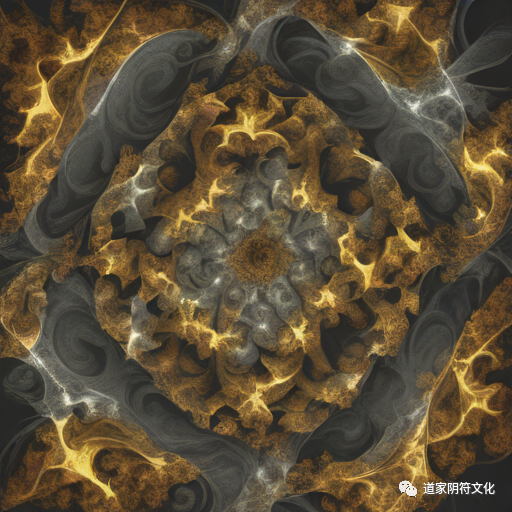
Fractals in three-dimensional space
Holographic theory claims that every tiny part contains the information of the entire system.Yet actual observation and experiment show that matter is discrete, composed of atoms and molecules, and that there exist extremely small spatial units—such as the Planck length—indicating that space is discrete to some degree.From the viewpoint of modern mainstream science, holographic theory is problematic.For if the holographic viewpoint holds—that every tiny part contains the information of the entire universe—then matter and space would essentially be continuous, not discrete.However, the discreteness we observe in reality contradicts that viewpoint. The discreteness of matter and the finiteness of space are part of traditional scientific views, and the holographic theory seems inconsistent with them.At the same time, in physics, it conflicts with some basic principles of quantum mechanics and statistical mechanics—precisely the pillars of modern physics.Modern quantum mechanics holds as a core feature the uncertainty principle: one cannot simultaneously determine a particle's position and momentum, or the precise values of certain physical quantities together.Yet the holographic viewpoint may conflict with the uncertainty principle, because it seems to imply precise information and order.However, physics itself has not unified the macro and micro, so this discussion can only be set aside for now.
From statistical mechanics as well, holographic theory conflicts with it, because statistical mechanics takes a probabilistic and stochastic viewpoint, using probability distribution functions to describe microscopic parameters such as particles' positions, velocities, and energy, addressing the random motion and collisions of microparticles—consistent with the basic principles of quantum mechanics and thermodynamics.Yet holographic theory may imply a higher degree of certainty, because it holds that information is contained in the whole system, which may conflict with the concept of microscopic randomness.Of course, these conflicts do not necessarily refute the concept of holography—because holography describes precisely the part they lack.Holography is a theory; the real problem is that in the real world, aside from the aforementioned things with obvious fractal features……many things, through ordinary means, are very difficult to distill or extract such self-similarity from.We can take as reference the practice of image compression technology.Images are made of pixels, but describing every pixel individually takes too much storage and costs too much, so compression is necessary.Among image compression algorithms there is fractal compression.In theory, if true fractal algorithms could be realized, this would be a wonderful idea; however, in ordinary natural images it is almost impossible to find a fractal unit—or only a very few fractal units—to iterate and expand.One can only find multiple parts with self-similarity and then perform local fractal compression; but the number of fractal blocks is simply too great, resulting in a very low compression ratio.Theoretically, absolute global holography does not exist; therefore it is impossible to compress an image down to the size of a single pixel and still reflect the information of the whole image.However, decomposing an image into multiple fractal unit blocks and iterating part by part is feasible.
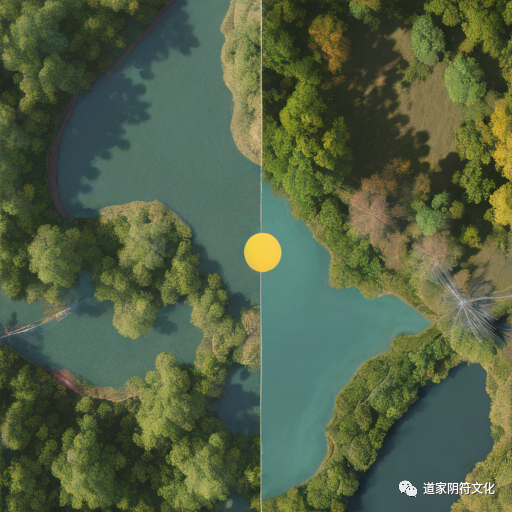
Thus we obtain the first inference:In complex systems, local self-similarity exists, so local information can be expressed through smaller local units—but such expression requires a certain "transformation."In reality, for example, diseases of heart and lung function can be judged from the sounds heard through a stethoscope.At the same time, self-similarity may also appear as cross-regional local similarity—for instance, in an image, a patch of trees may block the middle of a river, yet the two ends of the river still show similarity.
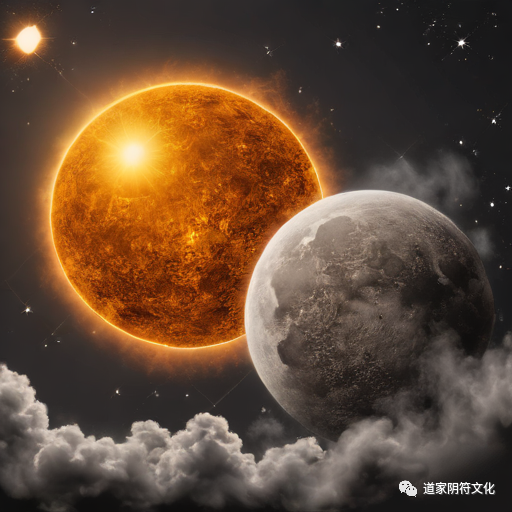
Again, in an image there may be circular sun and moon; though not the same, their outlines are similar.
If one pays attention, holographic theory has another key concept: implicate order. How does this implicate order manifest?For example, if a person has severe diabetes, high sugar will damage the microcirculation of the eyes, causing retinopathy; conversely, by observing retinal lesions one can judge that a person has diabetes.Google Health AI screening diseases through eye photographs—detecting diabetic retinopathy and hyperlipidemia—works on the same principle.But to understand it only this way is too shallow. As said earlier, a mere local region can be computed from a smaller local region via unit blocks plus an iteration formula.Clearly a problem arises: different locals will have different unit blocks and iteration formulas, unique to each image.Then is there a formula that all images can share—or is there some way, given a few key points, to "adaptively" solve for each local unit and iteration rule?If two-dimensional cartoon characters are treated as one class of images, does that class have common generation-rule parameters? Going further, without categorization—if all images are put together—can a common parameter also be found?In fact, image generation does exactly that.The now well-known diffusion models perform quite impressively at image generation: controlling generation via input keywords, and even directly replacing people, landscapes, or objects in existing images.This is possible precisely because implicate order exists.For image generation and control—though there are many techniques—all techniques point to one fact: latent variables exist behind images, and if one can control these latent variables, one can control image generation.In diffusion models, image generation does not happen abruptly; step by step, first from the input keywords key points are generated, then superimposed on a randomly generated Gaussian-noise background, then denoising diffusion is carried out step by step, until a clear image finally emerges.
And the key control in this process is the Markov chain as the underlying order.One then easily thinks: since it is a Markov chain drawing the image step by step, it is like sculpting—carving carefully bit by bit.
Yet stopping at this level is still not enough.Since order itself exists, can we find that order and realize the process more rapidly and conveniently, reducing the step-by-step derivation?From the traditional approach, diffusion models use numerical methods to iteratively solve ordinary differential equations; although more precise solvers can improve each step's accuracy and reduce the number of iterations, even the best of these methods still need on the order of ten iterative steps to obtain a sufficiently good solution.Simply put, it is a continuous iterative process, and theoretically this cannot be bypassed.But what if it is actually not iterated step by step at all, and can be done in one go?Mathematically, if one uses a Latent Consistency Model, then only a direct single-step solution of the ordinary differential equation is needed—directly predicting the equation's final solution—so in theory an image can be generated in a single step.
How is this realized? The idea here is very ingenious.First one must understand how ordinary diffusion models essentially work. If one has original data and keeps adding noise until it forms data full of noise under a normal distribution (chaotic data), then conversely, by continuously denoising the noise data, one obtains the original data.Since adding noise continuously is a step-by-step process, the reverse naturally is also step by step.But the world is not boundless; in fact all data—or more precisely, data observable and cognizable by humans—is finite, actually a very narrow range.
That is, everything we regard as "meaningful" and "recognizable" is actually only an extremely small part of this world, while the chaotic data everywhere in the world is clearly far larger than the range of cognizable data.
Thus a possibility arises: a function can be established from the given normally distributed noise data to the original data, so that only a few steps—or even one step—are needed to obtain the original data.
What humans can cognize is only an extremely small part of it all.
At this point one notices something interesting: all of these assumptions actually lack sufficient proof—but that does not matter; the practical results are remarkably good.
Here, if one thinks of Zhouyi numerology, it becomes even more interesting. Consider: the hardest-to-understand question in ordinary numerology is why a hexagram can yield the result directly, without layers of logical deduction.Think in reverse: the hexagram cast—for example in Six Lines—after obtaining a datum randomly, that datum is actually only a kind of "noise"; in between there is in fact layers of denoising until the original information is restored.
But because of latent consistency—no matter how complex the process by which the original information becomes the target chaotic data, it is a generation process—and in the inference stage that process can be completely set aside. One need only find correspondence between the randomly produced data and the original data, i.e. the true situation in the natural world, and obtain the result in one go.In short, both holography and implicate order must be observed; together they constitute the complete holographic theory.
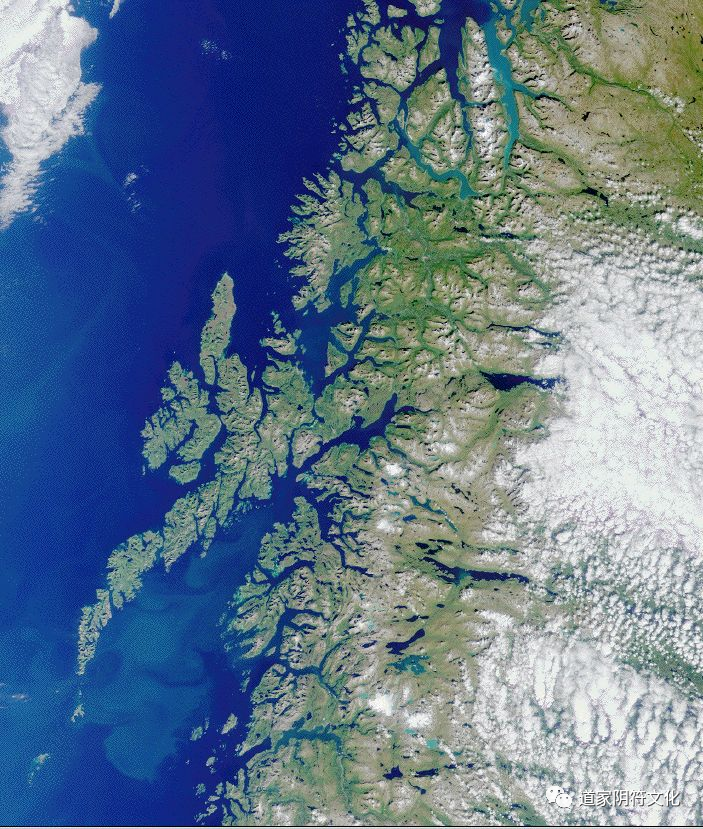 Self-similarity of coastlines
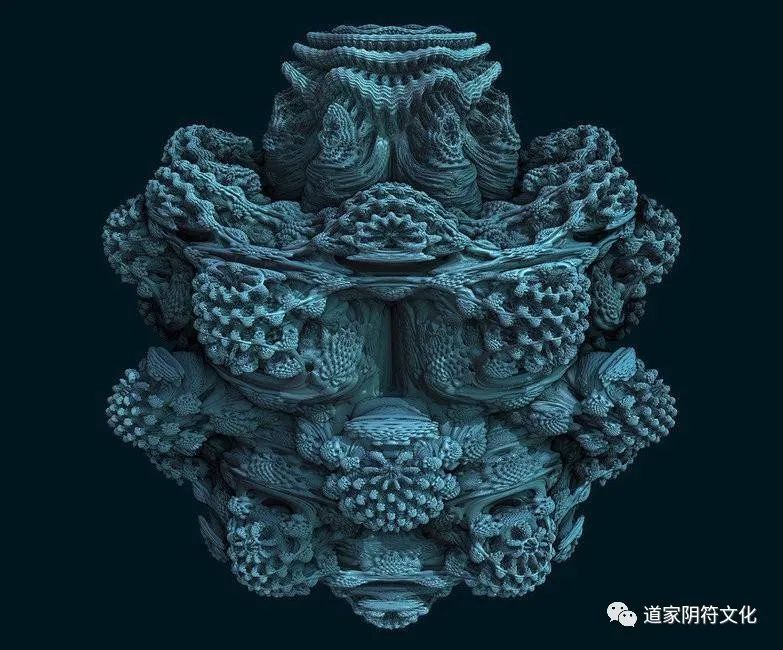 Fractals in three-dimensional space